

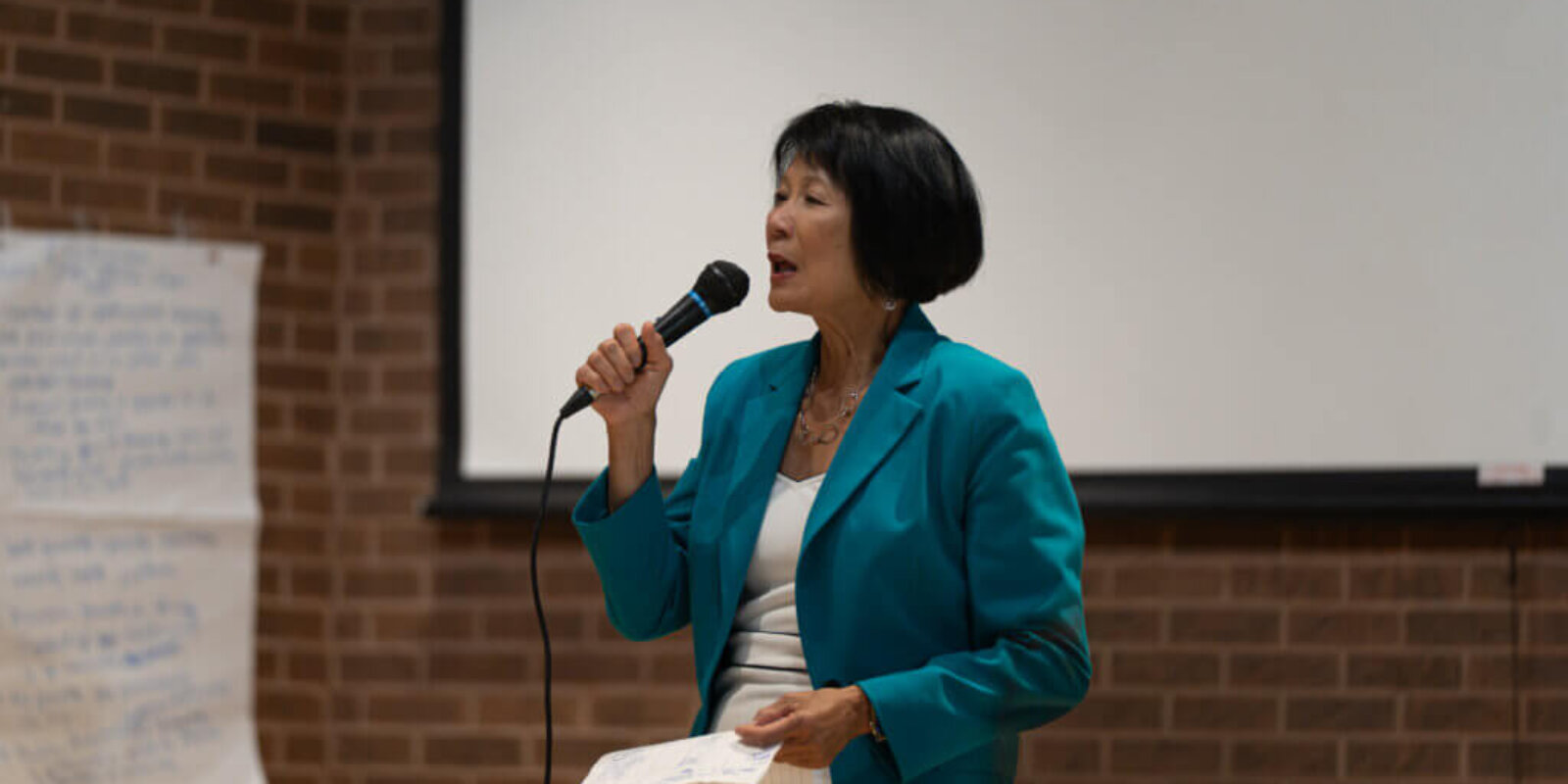
Filipino residents raised concerns about housing, public safety, transit, education and access to community services during a town hall with Toronto Mayor Olivia Chow on July 28.
More than 100 residents from Etobicoke, North York, Scarborough and Toronto-East York took part in roundtable discussions at Earl Bales Community Centre before each group presented its top priorities to the mayor.
The discussion showed that many of the concerns raised during the Filipino community’s first town hall in 2023 remain unresolved.
“These are still indeed the issues in 2026,” said Dr. Eileen de Villa, who presented on behalf of the Etobicoke group.
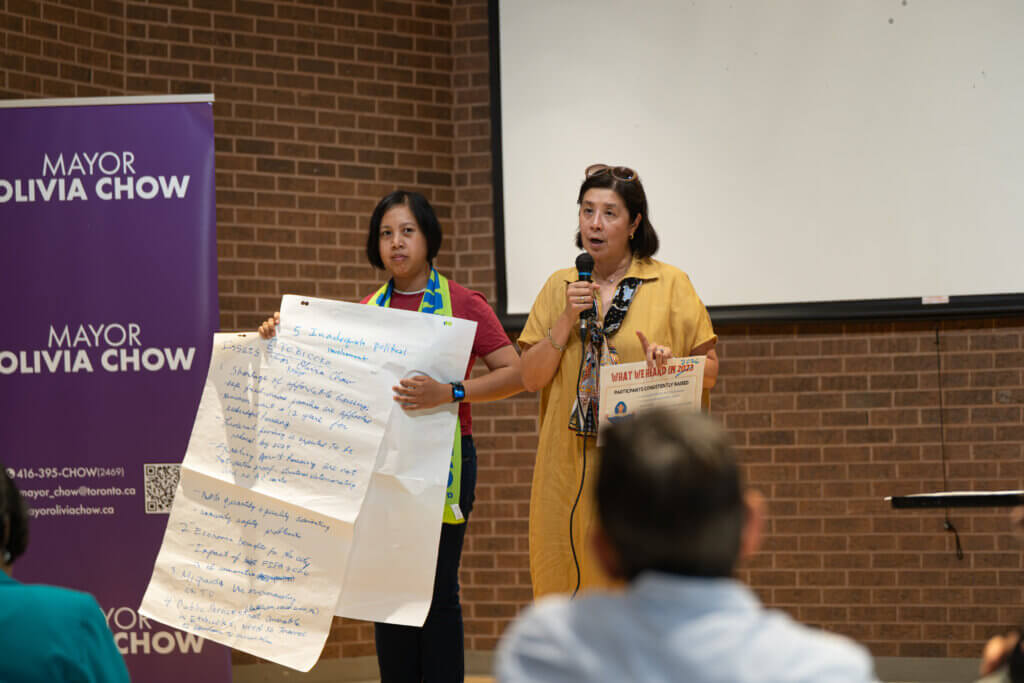
While housing was a shared concern across all four districts, residents also raised issues related to public safety, transit, education, youth services and access to government programs.
De Villa said Etobicoke residents want not only more affordable housing but homes that are safe and connected to essential services.
“We talked not only about the affordability of housing but talked about quality of housing,” she said. “At the end of the day, we want to have safe places.”
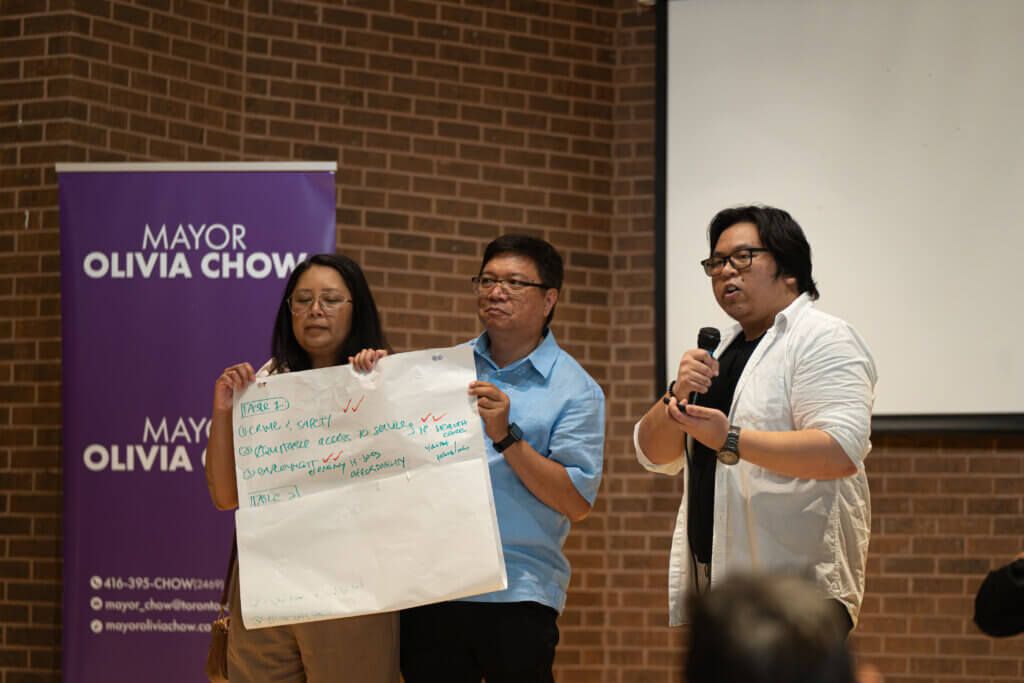
The group also called for improved access to health-care services and higher-order transit.
North York participants cited the rising cost of living, overcrowded schools, barriers facing newcomer youth and international students, and limited recreation opportunities for seniors and youth.
“We cannot afford living in this city anymore,” said facilitator Rizza Solis.
Scarborough participants focused on community safety, employment and mental health supports, while Toronto-East York residents called for a permanent Filipino gathering space and a centralized resource to help residents access government services.
“Our people work hard,” said Scarborough representative Marlon Mortilla.
“While we’re out working, we need to make sure that they are at home or with their peers, not being in trouble and getting the skills that they need.”
A space to gather
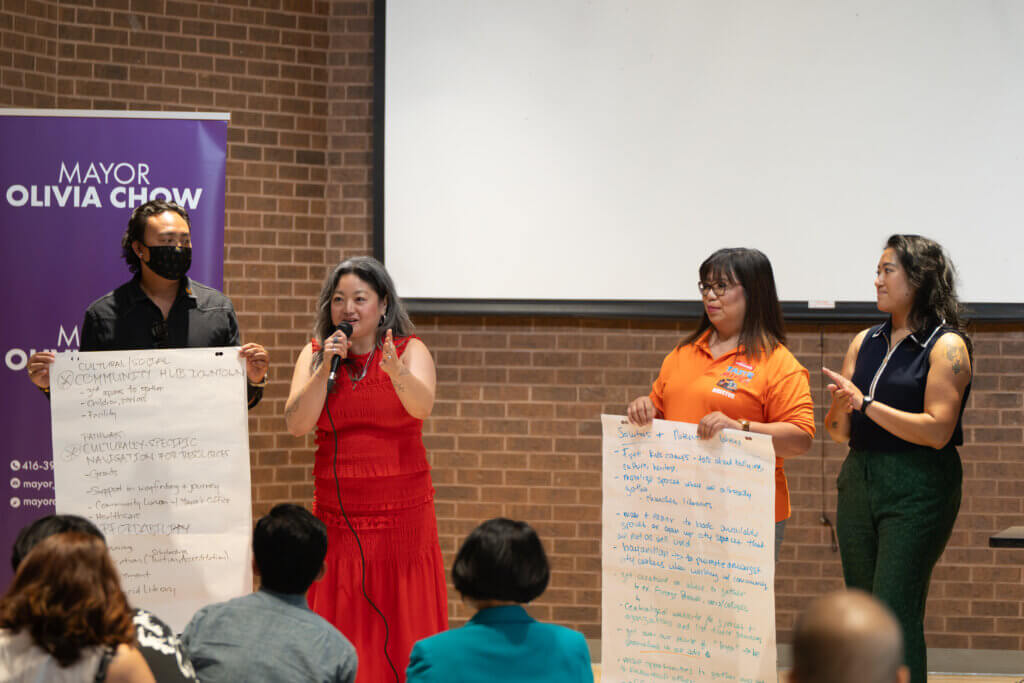
Toronto-East York facilitator Dee de Lara said many Filipino families living downtown lack spaces where residents can gather and support one another.
“We are looking for spaces to gather, for places for children to come together, to be raised in a village, for places for seniors to connect,” she said.
Responding to the presentations, Chow said affordability connected many of the issues raised throughout the evening.
“It looks like everybody is interested in affordability,” she said.
She said Toronto has already built about 25,000 housing units and plans to add another 100,000, with at least one in five designated as affordable housing.
She also highlighted the city’s Multi-Unit Residential Acquisition (MURA) program, which helps community organizations purchase rental buildings and preserve them as affordable housing.

“So if tomorrow, the Filipino community wants to buy a building and turn that building into a non-profit co-operative or land trust, you could actually do that,” Chow said.
Chow also responded to repeated calls for a dedicated Filipino gathering place, saying city council would begin working with the community to identify a future Filipino community hub.
“The Filipino community is growing, so we need a place to meet for seniors or children,” she said.
Chow said city council was already taking steps to make that happen by directing staff to begin working with the Filipino community on identifying a location.
“There is a motion asking the city staff to work with all of you to find a space to start the process of getting a Filipino community hub. I think it’s time.”
Addressing affordability beyond housing, Chow highlighted free school meal programs, frozen TTC fares, tenant protections and the Rent Bank program.
She encouraged residents to contact 311 to learn about city services.
“You just need to know about it,” she said.
Responding to concerns about youth, public safety and mental health, Chow said the city has expanded summer jobs, after-school programming and the Toronto Community Crisis Service.
“If you know of people that need mental health support, if they’re in crisis, call 2-1-1,” she said. “We have expanded the service 24-7 across the city.”
Filipino participation in politics needed
Chow also encouraged greater Filipino participation in municipal politics, noting Toronto has never elected a Filipino city councillor.
“I think it’s important to participate in democracy. One of you should think about running as a city councillor,” she said.
She also endorsed a recommendation from participants to establish regular communication between Filipino organizations and City Hall.
“Yes, that’s what we should have,” Chow said.
“Let us include more people in the next term so that more of these interchanges can take place because this has been a fabulous opportunity for us to hear each other.”
The evening concluded with organizers encouraging residents to remain engaged as discussions continue between Filipino community organizations and City Hall.


