If you think you can knock door to door in the Philippines wearing your Halloween costume and expect treats, well, you’re in for tricks instead.
(You may get a handful of rice.)
Most Filipinos can’t afford to give out candy, or even buy costumes to wear.
And forget about carving pumpkins, either.
We have kalabasa (squash), and no, you can’t carve those. Plus, they’re not the slightest bit orangey.
In more affluent cities and neighbourhoods, you may see Halloween decorations on the front lawn.
Most middle and upper class families host Halloween parties, wearing the best costumes and handing out treats to each other’s kids.
For the majority of Filipinos, though, Halloween is celebrated in many different ways.
Halloween for days
While North America celebrates Halloween on the eve of October 31, Filipinos celebrate for a few days.
All Saints’ Day is on the first of November, honouring all known (and unknown) saints in the Christian church.
This non-working holiday is also called Todos Los Santos, and it is the start of an annual pilgrimage to cemeteries across the country.
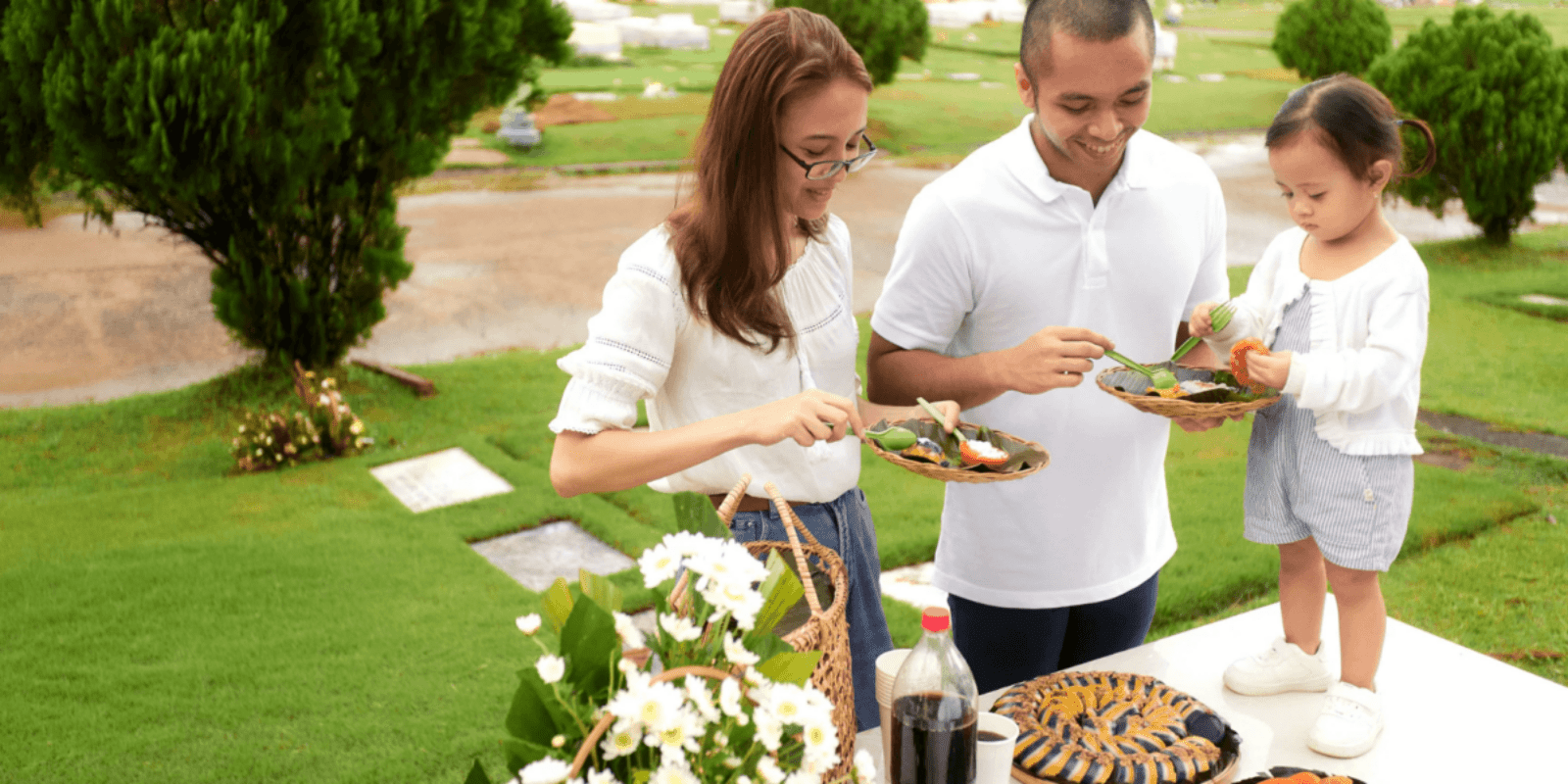
Filipino families get together in cemeteries for reunions, cleaning and painting the tombstones of their loved ones, offering food, prayers and flowers.
This custom continues to the next day, November 2, another non-working holiday, as they officially celebrate All Soul’s Day.
Filipina author Clarissa Gonzalez remembers it well:
“Halloween in the Philippines is not about carving pumpkins or dressing up for trick or treat.
Mainly it’s the eve of Todos los Santos, All Saints Day, when families went to visit the graves of loved ones.
I remember it was a happy time. The uncles and male cousins were sent to the memorial parks to clean and paint the graves of our departed loved ones.
My mother and aunties made flower arrangements to decorate the graves of our grandparents.
We prepared food for the family gathering in the memorial park the next day.”
Cemeteries are where it’s at
It’s definitely a party atmosphere at cemeteries in the Philippines on All Souls’ Day.
People bring their karaoke machines and sing, while the light from thousands of candles on top of tombs illuminate the cemeteries.
Children run around while parents chat with neighbours, remembering loved ones who passed away.
“Sometimes, we would go to the cemetery early, the night before Todos los Santos,” said Gonzalez.
“Our parents would lead the prayers and light candles. Afterwards, I played with my cousins and we scared each other with ghost stories.
We gathered the melted candle drippings and rolled them into balls. We competed with each other on who could make the biggest ball of wax.
There were no portable karaoke machines yet when I was growing up, so my brother and cousins played the guitar and sang pop songs—James Taylor, the Beatles, etc.
It was a happy, noisy family reunion,” Gonzalez recalled.
Difference between All Souls’ Day and All Saints’ Day
Since the Philippines has one of the largest Catholic congregations in the world, many Filipinos follow Christian traditions.
All Souls’ Day is celebrated to honour, pray for and remember those who have died, and to reflect on eternal life.
All Saints’ Day is set aside to remember the saints in the church, and to emulate their example.
These two days are meant to be celebrated with family and loved ones, to slow down and relax and focus on the meaning of life, and the afterlife.