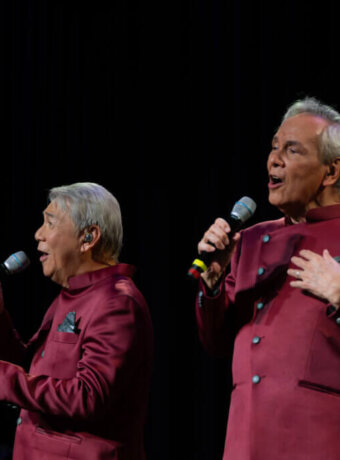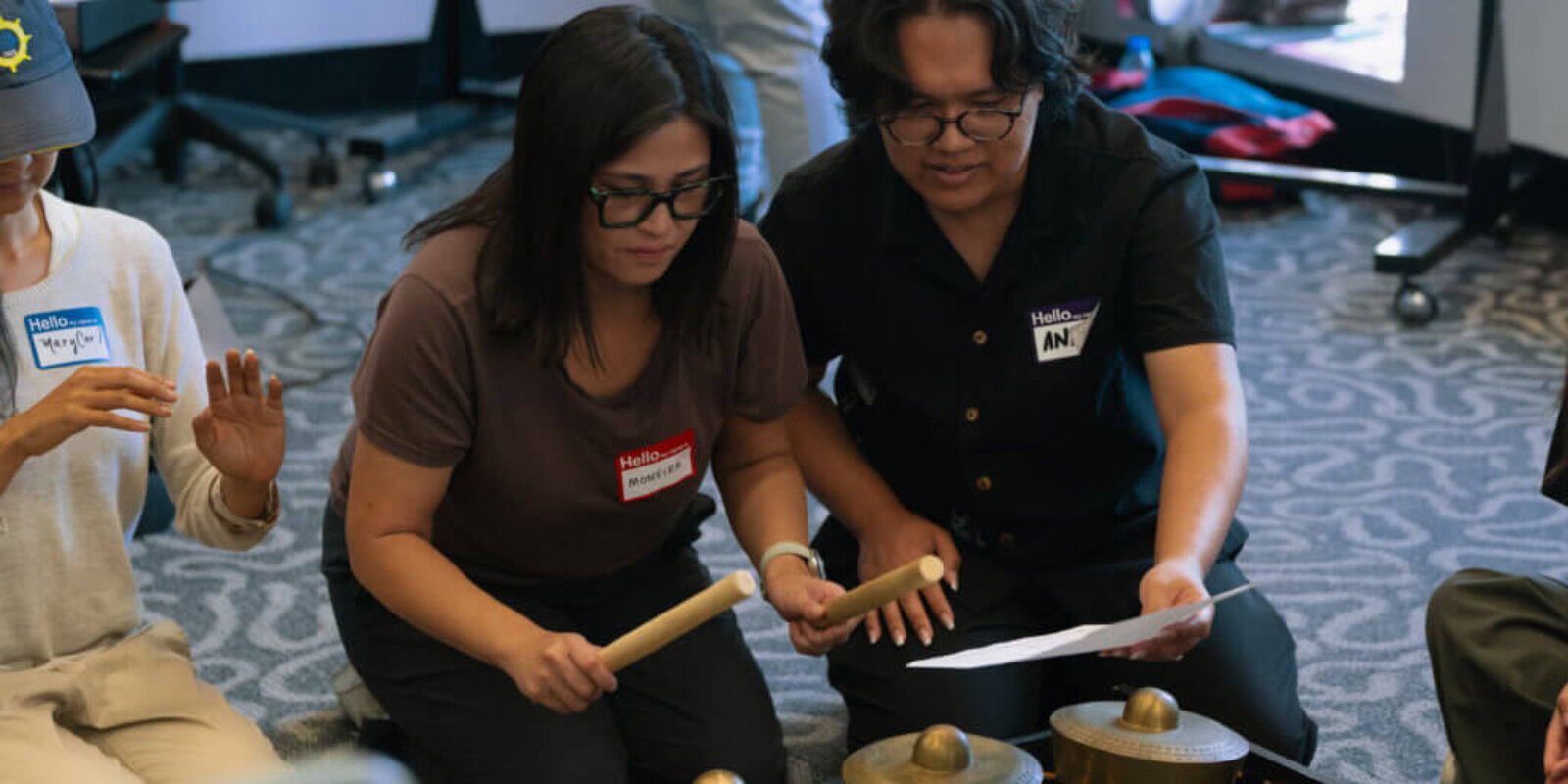
Echoes of Home: A Kulintang and Community Choir Project, explored Filipino folk music and kulintang through hands-on workshops designed to reconnect Filipino Canadians with their cultural heritage.
Participants gathered at OCAD University on Aug. 4 for the first day of the two-day community arts initiative.
The morning featured workshops on Filipino folk music, where participants were split into different classrooms to learn songs from various regions of the Philippines under the guidance of music educators.

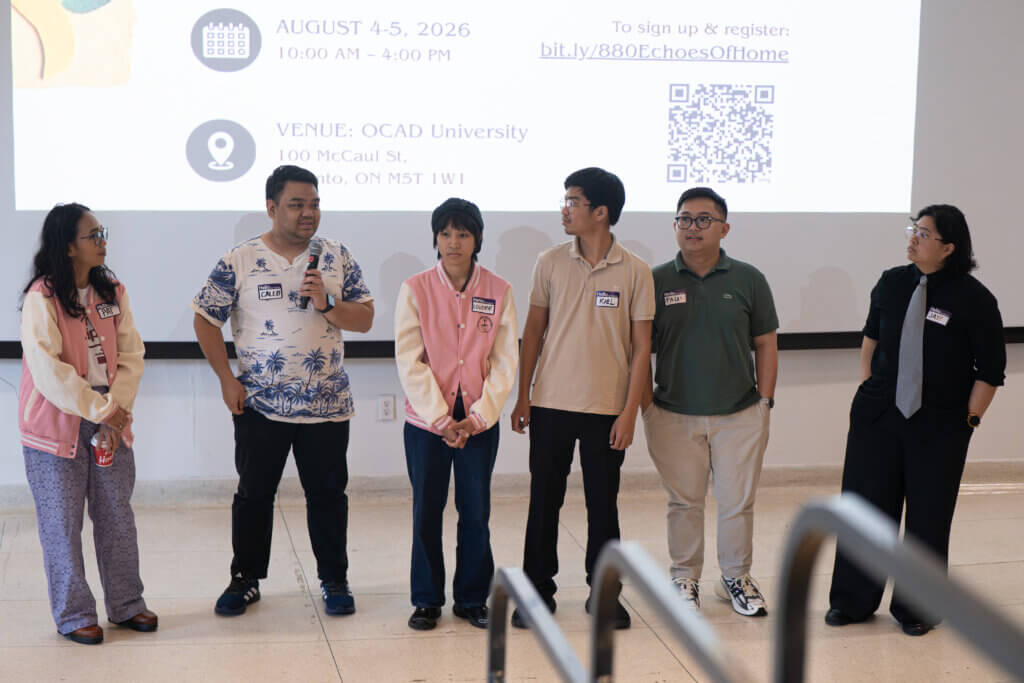
Sessions were led by Prof. Anna Patricia Carranza, Caleb Charles Noroña, Loudrie Lolarga, Kael Vicente, and project lead Andre Lorenz Feria.
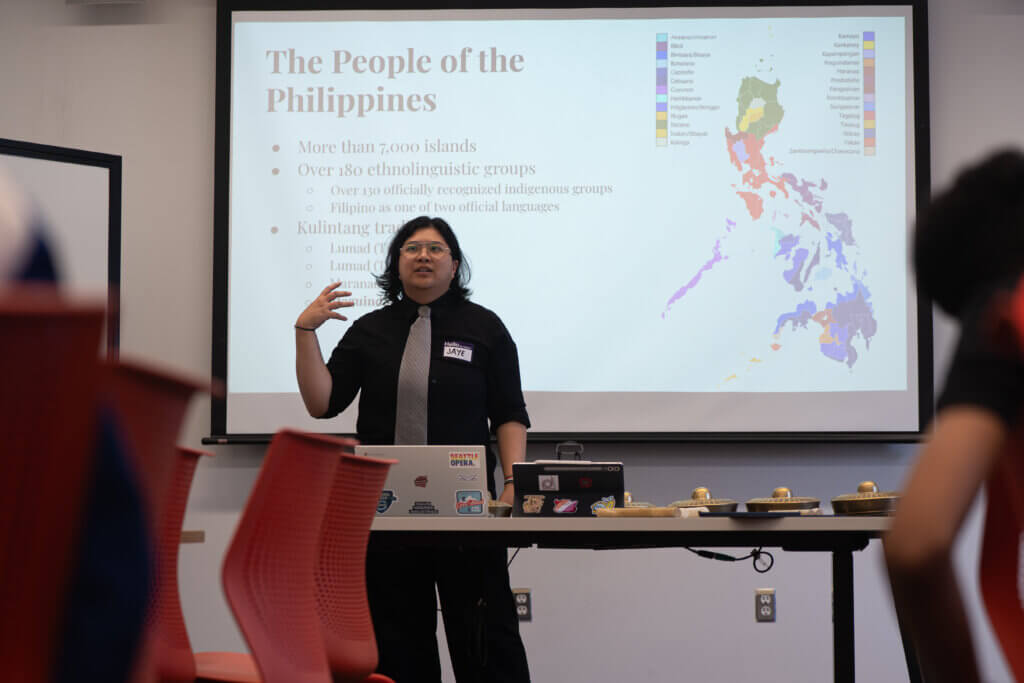
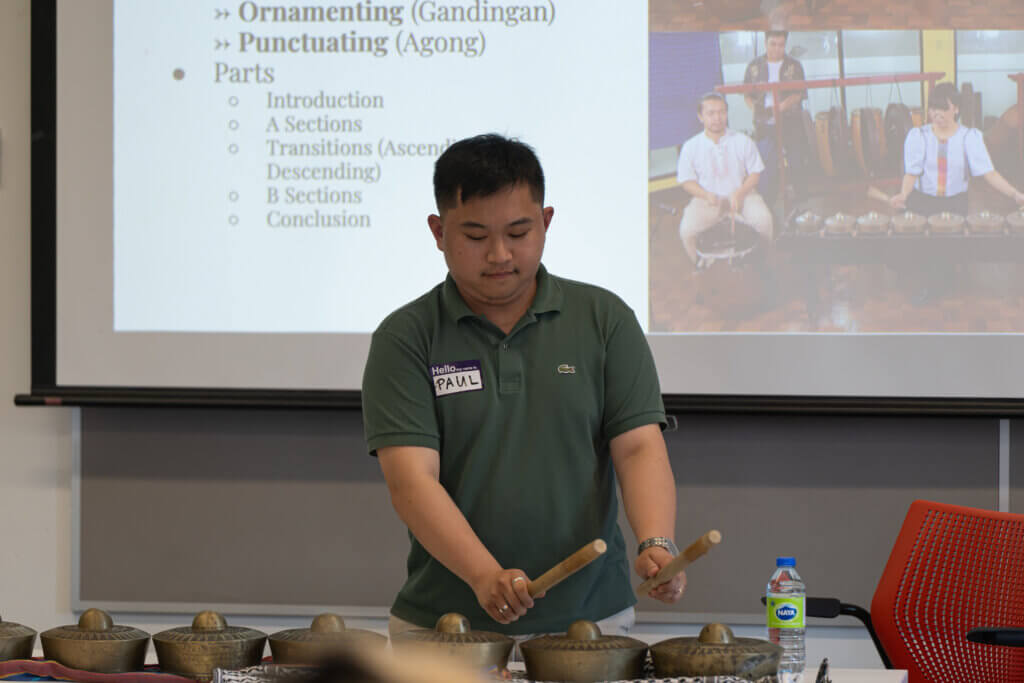
The afternoon shifted to kulintang workshops led by Jaye Regalado and Paul Malicdem, introducing participants to the instrument’s history, cultural significance and performance techniques.
The project is supported by the Ontario Community Changemakers program through 8 80 Cities.
It is presented in partnership with the University of the Philippines Alumni Association of Toronto (UPAAT) with facilitators from Canada, the Philippines and the United States.
A gateway to Filipino musical traditions
Project lead Andre Lorenz Feria, an ethnomusicologist and music educator, said Echoes of Home grew out of his passion for music education and his desire to introduce Filipino Canadians to the country’s diverse musical traditions.
“I realized that many first and second-generation Filipino Canadians are not familiar with the kulintang or even folk songs outside of Tagalog,” Feria said.
“I wanted this project to become a starting point for people to explore our own culture.”
Feria said that combining Filipino folk songs with kulintang workshops was intentional, allowing participants to experience different musical traditions in a single program.
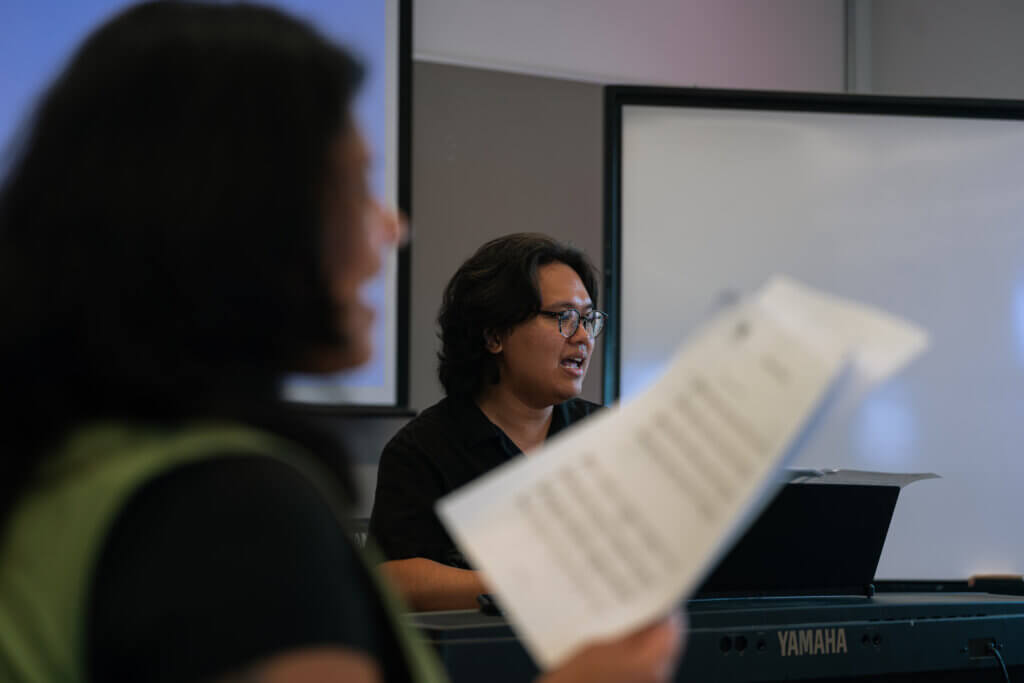
He also said the workshops were designed to prepare participants for Wednesday’s culminating community concert, where they would showcase what they had learned.
“We wanted the first day to be an experience,” he said.
“Then the following day, participants can share what they’ve learned through performance.”
Feria said the workshops also aim to challenge the idea that Filipino culture is homogeneous.
“The Philippines is not a monolith,” he said.
“We’re made up of more than 180 ethnolinguistic groups, and each has its own culture, music and traditions.”
“I hope this becomes a gateway for people to discover more of those cultures,” Feria said.
Preserving Filipino musical traditions is especially important for communities living abroad.
“For many people, going back to the Philippines isn’t always possible,” Feria said.
“Attending Filipino cultural events is one of the most accessible ways to keep our culture alive.”
Learning through music and community
Music educator Prof. Anna Patricia Carranza, chair of the Department of Music Education at the University of the Philippines College of Music, said that teaching Filipino music in person offers opportunities that online learning cannot provide.
“Folk music is of the people,” Carranza said.
“It’s relational. There are stories, movement and conversations that go beyond the music itself, and those are best experienced face-to-face.”
She was particularly encouraged by the wide range of participants who attended the workshops.
“It was very intergenerational, from six-year-olds to people in their seventies,” she said.

“Every classroom had something different happening, whether it was Cordillera music, partner songs, choral singing or discussions about Filipino identity.”
Carranza said the workshops also encouraged participants to think more deeply about what it means to perform Filipino music while living outside the Philippines.
“The discussions weren’t only about music,” she said.
“They were also about identity, dialogue and understanding the many ways Filipino culture has evolved.”
Participants reconnect with their heritage
For participant Joanna De Los Reyes, the workshop was an opportunity to deepen an existing interest in the kulintang while learning directly from educators from Canada and the Philippines.
“I knew Andre pretty well and already had some background in kulintang and choral music,” she said.
“But having educators come internationally made it such a unique opportunity. It was free, accessible, and honestly a once-in-a-lifetime experience.”
She said learning about the history of the kulintang and the traditions of the Maguindanaon people gave her a broader appreciation of the music.
“It was great to learn from people who have studied these traditions for years and are deeply connected to them,” she said.
De Los Reyes also appreciated seeing people of different ages and backgrounds learning together.
“It helped me connect with other members of the Filipino community,” she said.
“Everyone came with different experiences, but we were all sharing the same space and learning together.”
The project concludes Wednesday with a community concert featuring workshop participants, followed by panel discussions on Philippine music, Filipino identity and the Filipino diaspora in North America.
Updated Aug. 11, 2026 to correct the spelling and title of Jaye Regalado. Mabuhay Canada regrets the error.
 Luis Miguel De Castro is a Changing Narratives Fund-Local Journalism Initiative reporter at Mabuhay Canada and a journalism graduate at Humber Polytechnic in Toronto. Originally from the Philippines, he is passionate about community storytelling, multimedia journalism, and amplifying Filipino voices through meaningful local coverage.