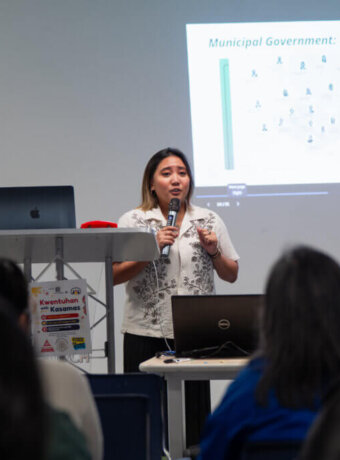
Filipino BC will host a free online information session Thursday, Sept. 10, to help Filipinos in British Columbia better understand separation and divorce while providing a private space to learn about legal and community resources.
The two-hour session, “Kusina: Navigating Separation & Divorce,” will run from 6 to 8 p.m. in partnership with YWCA BC.
It is part of Filipino BC’s Kusina program, which connects community members with legal information and social support services.
Kristina Corpin-Moser, executive director of Filipino BC, said the session is designed to provide information to people considering or experiencing separation or divorce, including those who may also be dealing with intimate partner or gender-based violence.
“It’s an information session, and that’s a good way of framing this because fundamentally, we want to create spaces where people can come and access the information,” Corpin-Moser said.
“But it’s not a session designed to tell people what to do.”
For Filipino immigrants, navigating separation can carry additional challenges.
Divorce remains illegal in the Philippines, and Corpin-Moser said language barriers and unfamiliarity with Canadian services can make seeking information difficult.
She said those challenges can be compounded by stigma surrounding separation and divorce within Filipino and other Asian communities.
“Part of it being part of a Kusina program, which has always been sort of the mandate of Kusina programs, is to create spaces where we lower the barrier to access,” she said.
The session will provide broad information about resources available in B.C. rather than legal advice for individual cases.
When participants have questions involving more complicated circumstances, Filipino BC can connect them with organizations offering specialized legal assistance.
Corpin-Moser said the goal is also to remind participants that other people in the community may be experiencing similar situations.
“You’re not the only Filipino who’s going through this,” she said.
“You’re not the only one looking for this information.”

YWCA BC will bring its experience supporting people affected by gender-based and intimate partner violence, while Filipino BC will provide the cultural and community perspective.
“This partnership is where they bring the expertise around the resources available and we bring the expertise around being Filipino,” Corpin-Moser said.
She said combining those perspectives can make participants more comfortable accessing information from an established organization, while knowing the session was developed with the Filipino community in mind.
Although the program primarily serves Filipinos, people from other communities can also access its programming.
Privacy will be particularly important during Thursday’s session because of the sensitive nature of the discussion.
Participants can attend anonymously and are not required to speak or share their experiences.
Corpin-Moser said people can simply listen and take in the information if that is what makes them comfortable.
“There’s a lot of ways that we create that safety, whether it’s anonymous participation or, you know, lack of participation even — like the ability to just come and sit and listen and be in the space,” she said.
Unlike some of Filipino BC’s broader information sessions, the separation and divorce session will be kept closed to people who are not seeking its resources.
Corpin-Moser said the organization uses a trust-based approach while protecting the privacy of those attending.
Corpin-Moser hopes participants leave knowing where they can seek additional help if they need it.
She said access to accurate information is particularly important when people may otherwise rely on advice from family, friends or others in their community.
“I hope that for somebody who needs legal aid, who’s going through a family separation, that they understand the pathways to get there, that it diminishes any stigma or anxiety about accessing that,” she said.
Ultimately, Corpin-Moser said the session is about giving participants information and confidence without pushing them toward a particular decision.
“They come out of it feeling more informed and empowered to make decisions, regardless of why they’re there and what decisions they want to make.”
 Luis Miguel De Castro is a Changing Narratives Fund-Local Journalism Initiative reporter at Mabuhay Canada and a journalism graduate at Humber Polytechnic in Toronto. Originally from the Philippines, he is passionate about community storytelling, multimedia journalism, and amplifying Filipino voices through meaningful local coverage.