Third part of the series “Reconnection”: Reviews of children’s literature spotlighting Filipino culture by Kimberly Lopez
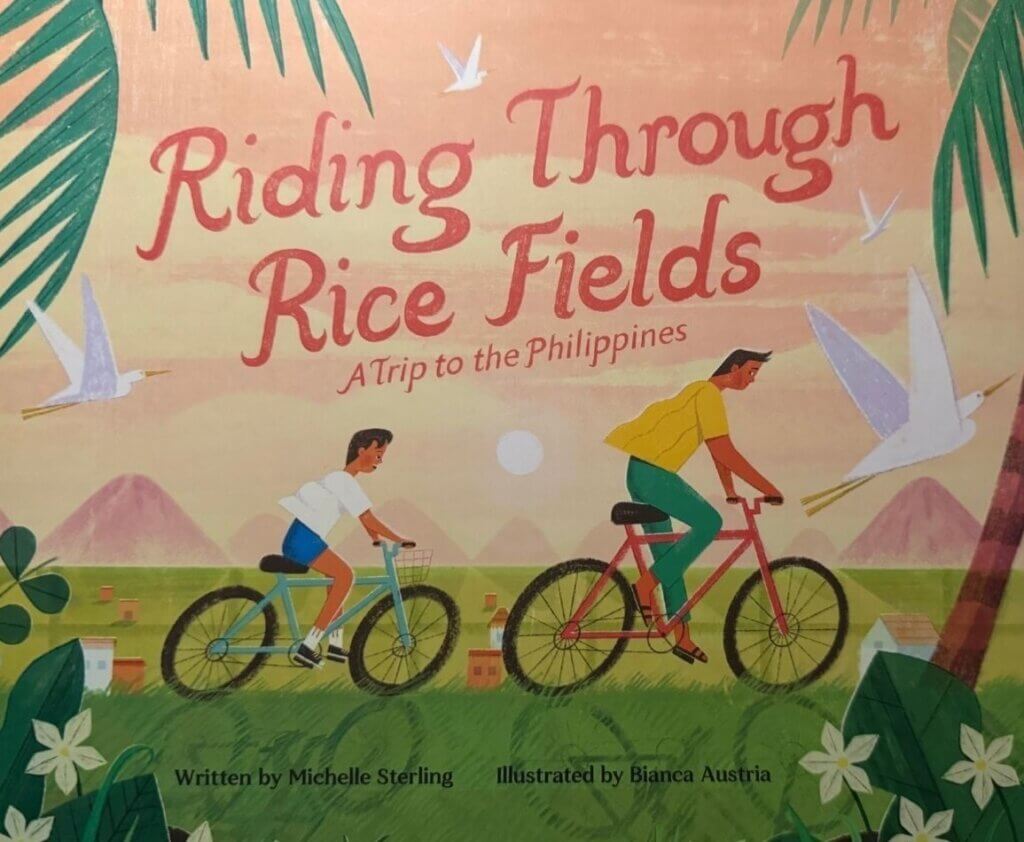
This book—Riding through Rice Fields: A Trip to the Philippines—by Michelle Sterling, gave me all the feels.
There’s something about reading a children’s book that brings me back to my visits ‘back home’ as a child.
My parents would alternate taking me to stay and vacation in the homes of the various arms of their respective families, affording me a very textured experience of various iterations of Philippine family culture.
The story is about a boy and his father who return to the Philippines and take a bike trip through rolling hills, encountering villages and kababayan who exchange support for each other’s efforts.
Sterling does well to reflect our culture as one built around the abundance of neighbourly kindness and kinship.
She also talks about ease and hardship, connection and the difficulty of distance, and the land that generously provides, yet divides (“my heart sinks all the way down to my feet, but it’s time to leave”).
Sterling is a writer, photographer and speech-language pathologist.
She evokes the senses, “air that tastes like pineapples and ripe jackfruit” and stories nostalgia—“dad’s eyes crinkle with a smile”—in a way that makes it easy to become invested in their journey.
The colours are familiar and beautiful; conveying the depth and complexity of life from the depths of water to the heights of the mountain tops and beyond.

With rich greens, deep oranges and warm yellows, illustrator Bianca Austria captures a diversity of popular and niche Filipino/a/x experiences.
References to bayanihan, riding a carabao, climbing trees to pick coconuts, patintero, and the many sampaguita scrolled across the book highlight the fullness of life away from the city in the Philippines and abroad.
From a birds’ eye view of Mateo, the boy, and his father biking through the countryside to the first-person point of view of food, insects, and objects on table, the illustrations featuring different sight-lines pairs well with the cadence of the storyline.
The pauses—in text and in the spacing of the imagery—allows the reader to fill in the spaces with their own memories and reflections.
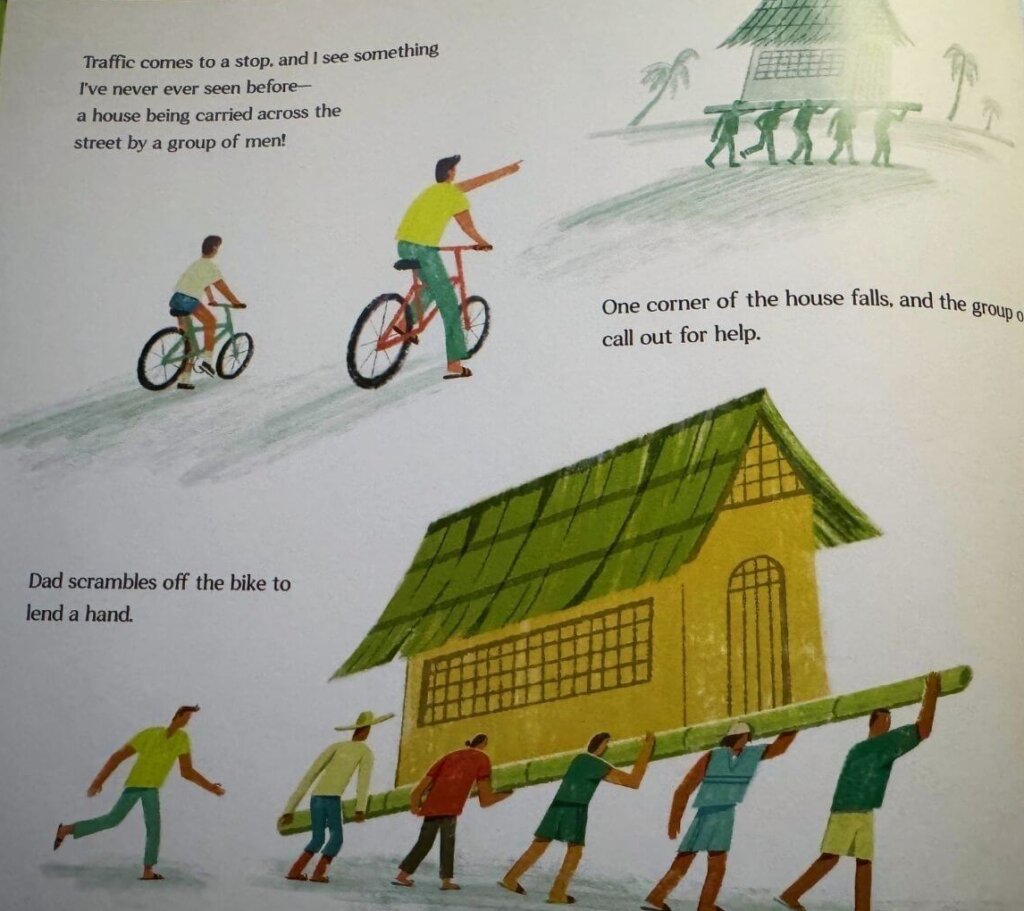
I especially resonated with the author’s inscription about bayanihan.
Sterling writes:
“Bayanihan is the concept of putting the needs of the community before one’s own needs.
It’s about coming together and working together to achieve a common goal.
Sometimes it’s the giving up of one’s time or resources, be they plenty or skim, for the good of others.
It’s helping others without expecting anything in return.
It can be as simple as people coming together to clean up their local school or cook meals for their elderly neighbors.
Where there is bayanihan, there is a strong sense of togetherness and looking out for one another.
Where there is bayanihan, there is care and there is love.
Where there is bayanihan, there is no me; there is us.”
I hope Mateo and his father’s story inspires readers to reach out and help their community wherever they see needs arise.
I found the statement to be so strongly central to the ethos of the book, capitulating Filipino expressions of radical kinship and reciprocity that are so strongly felt, but not boasted.
Father and son were able to “see each other” through the uncurated moments of their bike trip in Riding through Rice Fields: A Trip to the Philippines.
In doing so, the book reminds us of the importance of connection that memories and experiences of the homeland afford us.
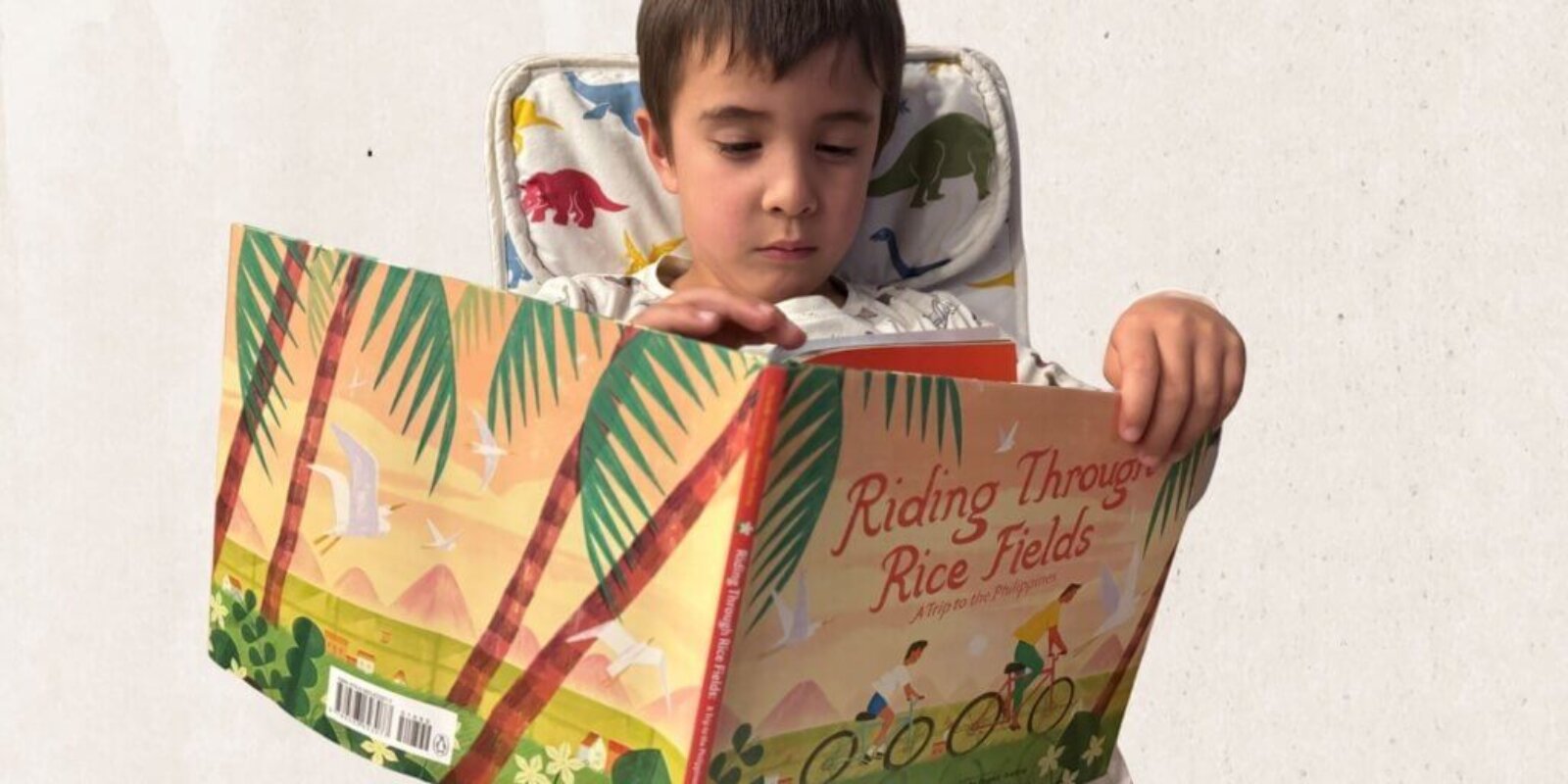
What my kids (aged 2.5 and 6) noticed:
The house on “sticks”, which allowed us to go into a description of the how and why of bahay kubo.
My son related to the enjoyment of bike riding.
He loves discovering new places and people along his travels, too.
From Kimberly Lopez: I’m on a journey to learn more about the culture I spent a majority of my life denying.
Being a Canadian-born Filipina to parents who immigrated in the ‘70s, for me, meant speaking English at home, having knowledge of things “back home,” while recognizing that’s where it stayed.
So, now, as an adult with young children of my own, I’m working to firmly reground myself and my family within Filipino culture.
On this journey to teach my kids who their ancestors were and about the Land we came from, I will be reviewing one children’s book a month about Filipino culture as part of a series titled, “Reconnection.”
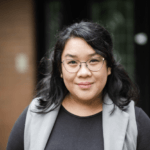 Kimberly Lopez is a scholar, creative, and community organizer. She is a second-generation “kid from Scarborough” who is passionate about expressions of care, kinship, and storytelling. As an academic, Kim is interested in the dynamics of migration, diasporic relations, and worker well-being and liberation. Dr. Lopez lives with her family in Tkaronto/Toronto, ON.