
A six-week food passport program is encouraging diners to explore Filipino restaurants and local art across Scarborough while giving small businesses a chance to reach customers beyond the Filipino community.
Tara Na! Kain Tayo sa Scarborough, presented by the Philippine Chamber of Commerce Toronto (PCCT), runs from Oct. 6 to Nov. 27 at five participating restaurants.
Diners can pick up a passport, try featured menu items and collect a stamp at each location.
Those who complete all five stops can enter a draw for a $500 prepaid Visa card on Dec. 1.
The project is part of Destination Scarborough’s Cuisine and Culture Activation Program, led by Scarborough Arts and supported by the City of Toronto.

From ordinary dining experience to community-wide celebration
Local artists have also been paired with participating restaurants to display their work.
PCCT president Von Canton said the chamber saw the program as a way to support Filipino-owned restaurants while using food to introduce people to the community’s culture.
“The food passport concept gives people a fun and interactive reason to explore different restaurants, discover Filipino dishes, and support local businesses,” Canton said.
“We wanted to turn an ordinary dining experience into a community-wide celebration of food, culture, and entrepreneurship.”
Beyond attracting diners during the six-week program, Canton said PCCT hopes the exposure can turn first-time visitors into returning customers.

That visibility can be particularly important for independent restaurants facing rising expenses and limited resources for promotion, he said.
“Many of these restaurants offer exceptional food, but they may not have the marketing budget or resources to reach customers beyond their existing communities,” Canton said.
The program also comes as Filipino cuisine continues to find audiences outside the community.
While dishes such as adobo, lumpia and pancit may already be familiar to some Canadians, Canton said the range of Filipino food extends well beyond those staples.
For diners unfamiliar with the cuisine, he sees the passport as an invitation to explore.
“You don’t have to be Filipino to enjoy Filipino cuisine,” Canton said.
“You just need curiosity, an appetite, and a willingness to try something new.”
Restaurants as art galleries
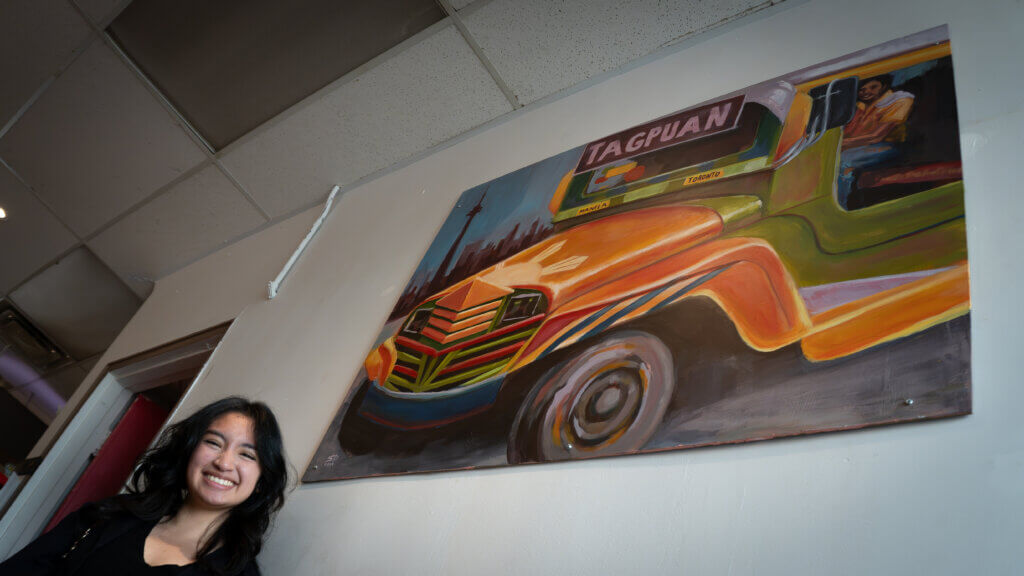
The program is also using the restaurants as spaces to showcase Filipino artists rather than separating its cultural component from the dining experience.
Among them is Toronto artist Sabrina De Leon, whose work is displayed at Tagpuan restaurant near Victoria Park Avenue and Lawrence Avenue East.
De Leon was invited to participate after PCCT saw her work exhibited with the Philippine Artists Group of Canada.
Her piece depicts a colourful jeepney arriving in Toronto, drawing on the meaning of the word “tagpuan,” or meeting place.
The jeepney represents people coming together over food, stories and relationships, while also reflecting the movement of Filipino people and culture between the Philippines and Canada.
“My hope is that my artwork can bring strangers together, spark conversations, and create opportunities for meaningful connections,” De Leon said.
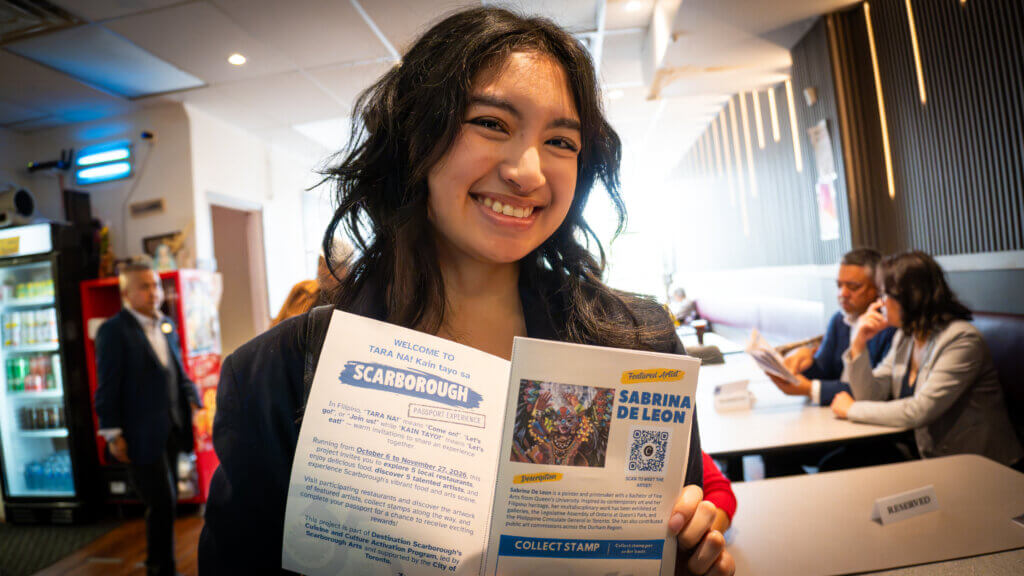
For De Leon, a first-generation Canadian, participating also offered another way to connect with the Filipino community and explore her own cultural identity.
She said displaying artwork inside restaurants makes it accessible to people who may not ordinarily visit galleries or formal exhibitions.
“Rather than having art limited to galleries or formal exhibitions, these installations allow people to discover and connect with local talent in a more natural and accessible way,” she said.
That combination of food, art and entrepreneurship is ultimately what Canton hopes will remain after the passports are put away.
He said success will not be measured solely by completed passports or meals sold, but by whether participating restaurants gain customers and visibility.
The project will also be measured on whether it encourages collaboration among businesses, artists and community groups.
For De Leon, the connection can also be personal, particularly for Filipinos growing up or living away from the Philippines.
“I hope my painting can remind us that ‘home’ is never as far as we think,” she said.
 Luis Miguel De Castro is a Changing Narratives Fund-Local Journalism Initiative reporter at Mabuhay Canada and a journalism graduate at Humber Polytechnic in Toronto. Originally from the Philippines, he is passionate about community storytelling, multimedia journalism, and amplifying Filipino voices through meaningful local coverage.