A Filipino-built language-learning platform is reaching Filipinos abroad who grew up unable to speak their family’s language, with its creators hoping technology can help diaspora communities reconnect with a part of their culture they may have missed.
Wika PH was created by six Filipino students —Kien Serapio, Alexander Galedo, Maria Leonabelle Santos, Mico Abas, Jude Tabuzo and David Memorando—as a platform for learning Philippine languages.
For Serapio, the idea began with his own experience growing up in an Ilocano family without learning the language.
At family gatherings, he would hear relatives speaking Ilocano and wonder why he could not understand them.
He also heard Visayan languages from the other side of his family, leaving him curious about why Filipinos often grow up speaking English or Tagalog without learning their family’s regional language.
“There isn’t really a lot of teaching done,” Serapio said.
“So I never got the chance to learn or converse in Ilocano.”
Digital language platforms lacking
When he began searching online for ways to learn, Serapio said he found books and other traditional resources but struggled to find a digital platform that could teach him.
“So instead of trying to find a solution, I built a solution instead with my team,” he said.
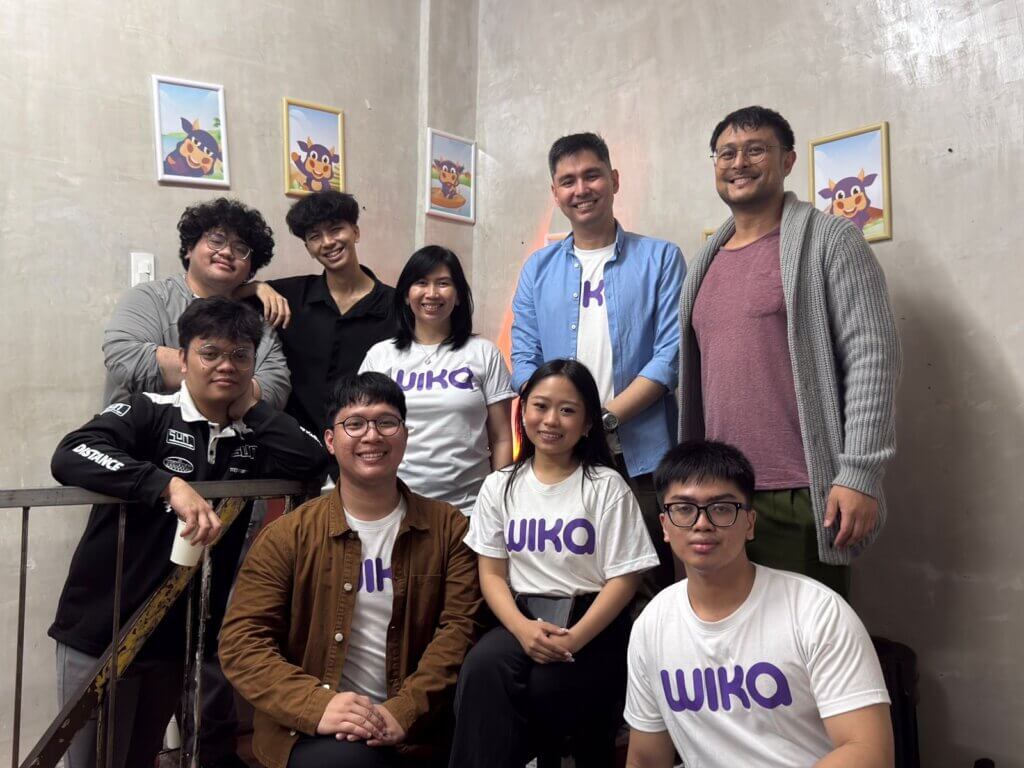
Five members of the team met through student organizations at the Technological University of the Philippines in Manila and began competing together in hackathons.
They later met Memorando while participating in Developer Camp Manila in March.
From there, the six built a Wika PH prototype in less than two days and finished as first runner-up.
Serapio said the response encouraged them to continue developing what had initially been a competition project.
The platform currently focuses on Tagalog, Cebuano, Hiligaynon, Ilocano and Asi, a language spoken in Romblon.
The team eventually hopes to introduce more languages while working with native speakers and communities to preserve resources for languages with less material available online.
An audience outside the Philippines

But one of Wika PH’s largest potential audiences may be thousands of kilometres away from the Philippines.
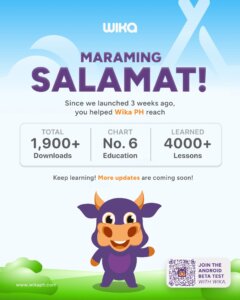
Serapio said 39 per cent of the platform’s learners are currently outside the country, with the United States and Canada among its largest international sources.
Users have also come from Japan, France and elsewhere in Europe.
From the beginning, he said, Filipinos in the diaspora were among the people the team envisioned using the platform.
This would include Filipinos outside the Philippines and parents trying to teach their children their own native tongue.
Feedback from parents abroad has reinforced that goal.
Serapio recalled hearing from families using Wika PH to introduce their children to Tagalog and aspects of Filipino culture they had not experienced growing up.
For the team, teaching heritage learners also means connecting language with culture.
Serapio said someone raised abroad may not have experienced the traditions and cultural environment surrounding a language the same way someone raised in the Philippines did.
Wika PH is working to personalize lessons based on a learner’s background and incorporate cultural knowledge alongside language instruction.
“We’re trying to teach you the local teachings in the Philippines that you might have missed out on,” he said.
Future plans
That approach is also tied to the team’s broader goal of language preservation.
Wika PH plans to work with native speakers and validators in rural communities to collect resources for languages that may have significantly less digital material available than Tagalog or Cebuano.
“In the long run, Wika PH can also be a main preserver of Philippine languages, and not only a teaching platform,” Serapio said.
The team eventually wants Wika PH to become a broader digital platform for Philippine languages, including partnerships with schools and cultural institutions in the Philippines and abroad.
For Filipino Canadians who may feel embarrassed about not speaking their parents’ or grandparents’ language, Serapio said that feeling can instead become a reason to start learning.
“It’s now the perfect time to embrace it,” he said. “This is now the avenue for you to be able to speak like a local, speak like a Filipino.”
For Serapio, that connection ultimately comes back to the problem that inspired the team.
Filipinos can share a national identity while sometimes being unable to understand each other’s languages.
Wika PH hopes to make those linguistic differences less of a barrier, regardless of where a Filipino grows up.
“No matter who you are, no matter where you came from, no matter where you were born,” Serapio said, “we’re all the same-blooded Filipinos.”
 Luis Miguel De Castro is a Changing Narratives Fund-Local Journalism Initiative reporter at Mabuhay Canada and a journalism graduate at Humber Polytechnic in Toronto. Originally from the Philippines, he is passionate about community storytelling, multimedia journalism, and amplifying Filipino voices through meaningful local coverage.