
A Filipino-American software engineer in Cleveland, Ohio, has launched a Tagalog-learning app.
The app connects diaspora learners with Filipino coaches in the Philippines, creating new opportunities for remote work.
Luke Patterson, founder of Tahanan, launched the app in January 2026 after discovering that many Filipino-Americans shared his experience of growing up without learning their parents’ native language.

The platform has since recorded more than 60,000 installs, according to Patterson, with users across 92 countries, including Canada, the United States, Germany and Australia.
Unlike language-learning platforms that rely primarily on automated exercises, Tahanan combines digital lessons with personalized feedback from Filipino coaches.
The coaches review voice recordings and help learners practise everyday conversations.
Tahanan app origins
For Patterson, the idea began with his own family.
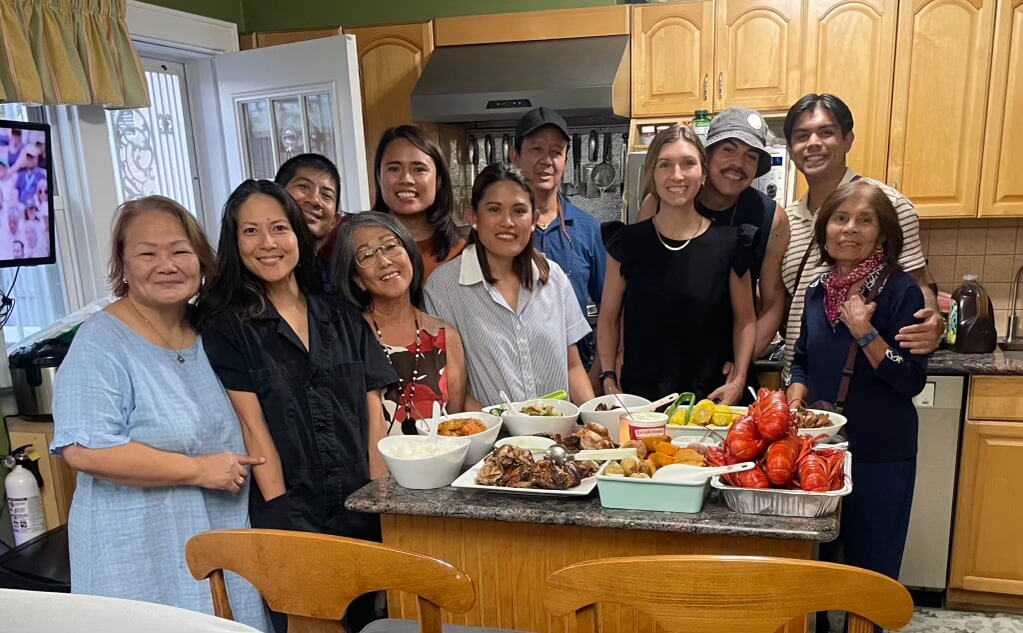
His mother immigrated to the United States from Laguna, Philippines, in the 1980s but never taught him or his siblings Tagalog.
Growing up in Ohio, Patterson often struggled to participate fully in conversations with his Filipino relatives.
Family karaoke gatherings were particularly memorable.
His cousins would encourage him to sing Tagalog songs even though he could barely understand the lyrics.
“It’s hard to feel fully Filipino when I’m surrounded by my Filipino family but can’t understand what they’re saying,” Patterson said.
Although he could recognize familiar words, speaking the language remained difficult.
As he grew older and moved away from home, he began to feel increasingly disconnected from his heritage.
That experience eventually pushed him to begin studying Tagalog at 29, taking private lessons with a Filipino tutor.
Patterson also began documenting his progress on TikTok, where his videos attracted other Filipino heritage learners who had similar experiences.
Many asked which language-learning apps he recommended, but Patterson struggled to find resources he trusted.
Drawing on nearly a decade of software engineering experience, including work developing mobile applications, he decided to build his own.
His first experiment was an artificial intelligence language partner that allowed him to practise speaking without feeling embarrassed in front of his family.
However, as the project developed, Patterson realized that technology alone could not provide everything learners needed.
He hired his Tagalog tutor to develop the curriculum and recruited Filipino voice actors.
He eventually brought an illustrator and Filipino language coaches into the platform.
“Language is supposed to connect people,” Patterson said.
That philosophy became central to Tahanan’s approach, which places human interaction alongside its digital learning tools.
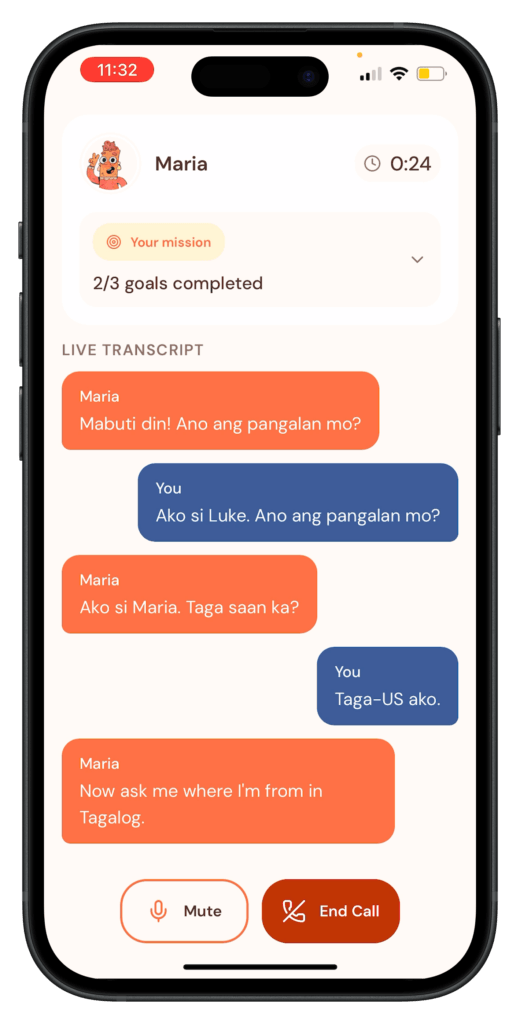
In the app, learners start with recorded dialogues and lessons on vocabulary and grammar before practising conversations with an AI language partner.
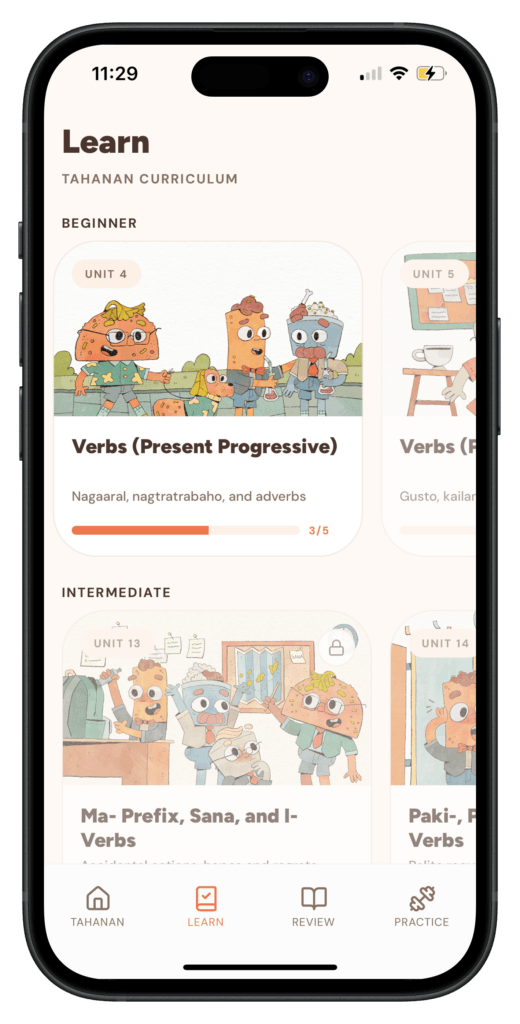
Filipino coaches then provide speaking challenges and review recordings, correcting pronunciation, sentence structure and other mistakes.
Patterson said the coaches also offer cultural guidance that automated systems may overlook.
Facial expressions, humour and conversational habits commonly used in the Philippines may be missed.
He recalled initially receiving about 300 applications within 12 hours of posting a coaching position online, highlighting the interest in flexible remote work.
Applicants are assessed on their language knowledge, teaching abilities and understanding of Tahanan’s mission.
Patterson also tests prospective coaches by asking them to review his own Tagalog recordings, with their feedback checked by other speakers for accuracy.
Aside from the lessons, he said the interactions have helped create friendships between coaches in the Philippines and learners overseas.
Some have exchanged more than 100 voice messages, allowing them to learn about one another while improving their language skills.
According to Patterson, the relationships demonstrate why human involvement remains important even as AI becomes more common in language education.
“There’s no replacement for speaking to a human,” he said.
The platform’s audience also extends beyond Filipinos who grew up abroad.
Based on Tahanan’s user questionnaires, Patterson said nearly eight in 10 learners identify as Filipino or of mixed Filipino heritage.
Nine in 10 want to learn Tagalog to communicate with family and friends.
Others are learning because they are marrying into Filipino families or want to communicate with their partners’ relatives.

The coaches can use that information to personalize their lessons, such as helping someone prepare to meet their Filipino partner’s grandmother for the first time.
Patterson is also working with a Cebuano curriculum writer to introduce Bisaya lessons by the end of 2026, responding to requests for more Philippine languages.
Despite the platform’s growth, Patterson said accuracy remains a priority.
Cultural expressions and language nuances don’t translate well through AI.

His experience has also changed his own relationship with Tagalog.
Although he still considers himself far from fluent, hearing the language now brings back memories of family gatherings and conversations from his childhood.
For Patterson, helping others develop those same connections has become more meaningful than simply building another language-learning app.
“That means everything to me,” he said.
“(With) everybody else learning, I feel like there’s really a connection.”
 Luis Miguel De Castro is a Changing Narratives Fund-Local Journalism Initiative reporter at Mabuhay Canada and a journalism graduate at Humber Polytechnic in Toronto. Originally from the Philippines, he is passionate about community storytelling, multimedia journalism, and amplifying Filipino voices through meaningful local coverage.