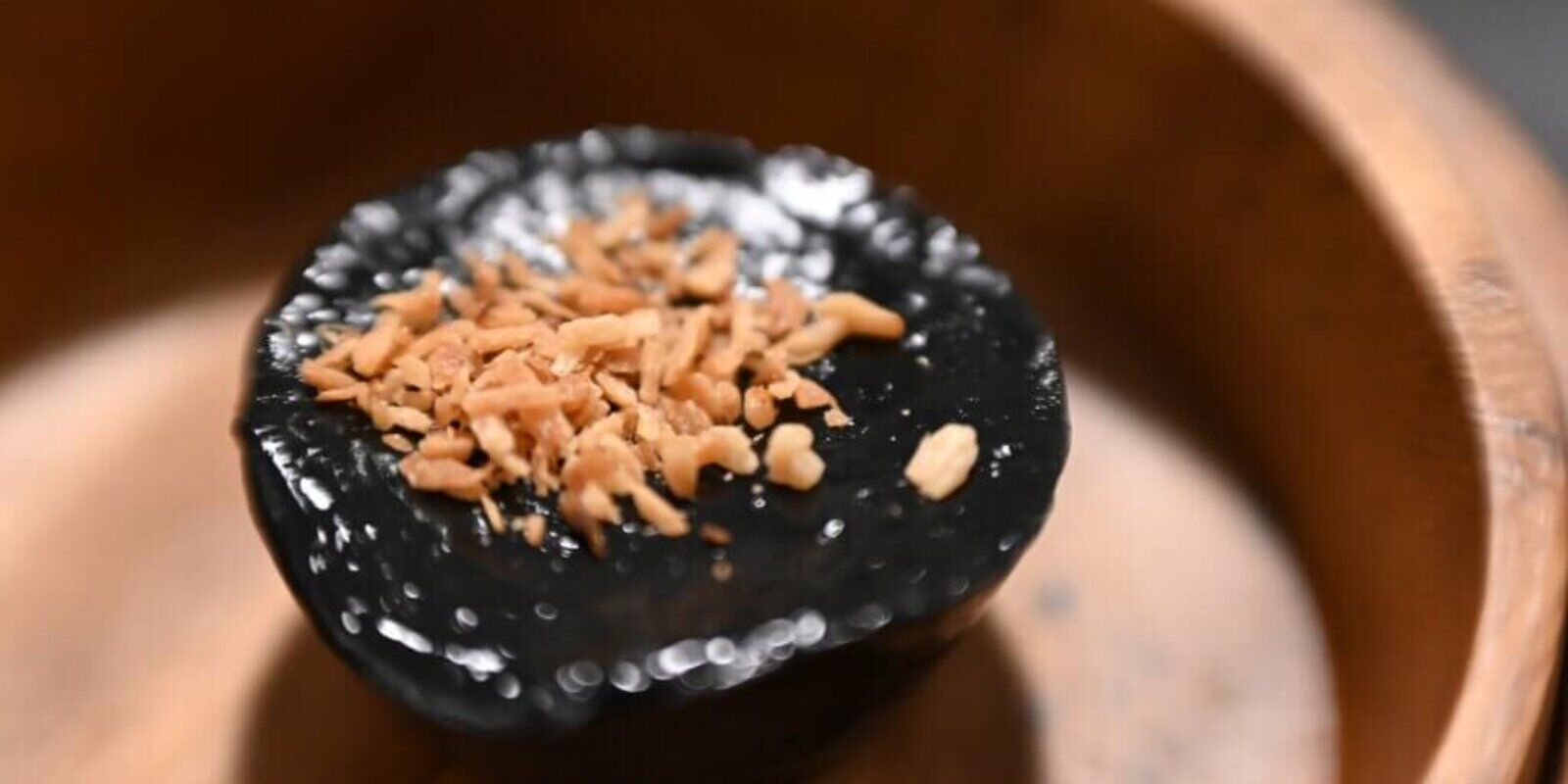
It’s shiny, it’s jiggly, it’s like jello, but with a caramel sauce topping and toasted coconut flakes, Nara’s Black Kutsinta is nothing like any other kutsinta.
Its colour—black as squid ink—always gets people’s attention, according to its maker, Rana Caramat.
“I saw it on Instagram and thought, ‘oh, this is unique’,” said Caramat, a bank manager by profession.
She wanted the dramatic colour—but not the artificial dye.
Normally an opaque brown, a kutsinta is made from rice flour, brown sugar, lye water, and water.
What makes Caramat’s kutsinta ink-black is activated charcoal.
The result is a deeply hued kutsinta (with no smell and no charcoal taste, if you were wondering), steamed to that signature chew, then balanced with a housemade caramel sauce that she fussed over until it was smooth and silky, and coconut she toasts herself.
It’s deceptively simple—and wildly labour-intensive.
“I don’t have a commercial steamer. It takes me a whole day to make it.”
Her small-batch precision shows: “I use about three to four tablespoon of activated charcoal, and that mixture can make about 120 kutsinta.”
Before steaming, the batter is dark grey; after, it blooms an elegant black.
Caramat’s journey began in the quiet hours of the pandemic.
“I was on maternity leave,” she shared. With a newborn at home and the need for extra income, she joined a home bakers’ Facebook group (Kain Tayo) and began taking orders.
“My baby was not even a year old at the time. I would make kutsinta while she was sleeping, mostly on the weekends.”
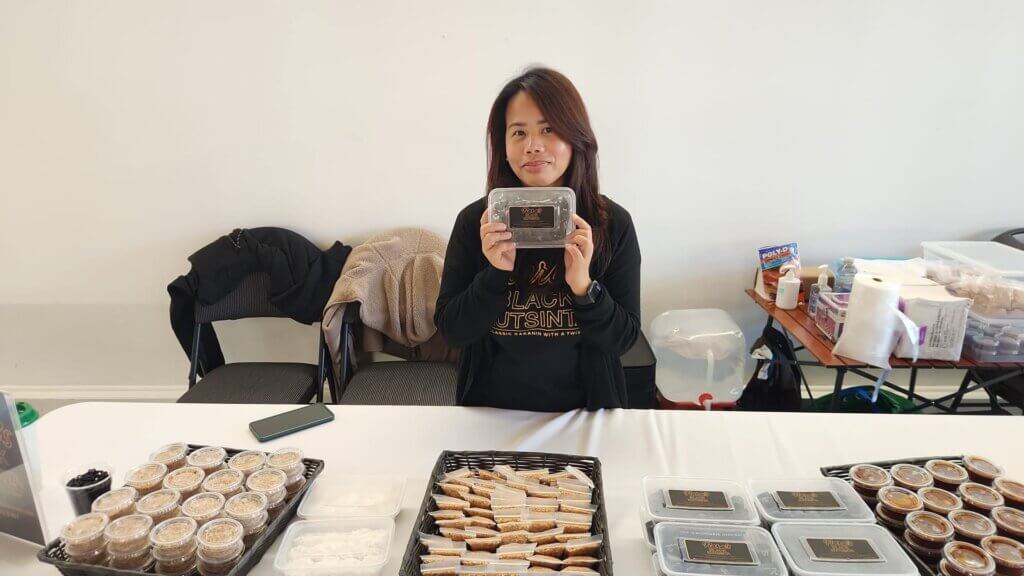
When work demanded Saturdays again, she paused.
But recently, working at a new bank location with no Saturday shifts, the calling returned.
“I didn’t have to work Saturdays anymore, so I thought maybe I should go back to selling kutsinta.”
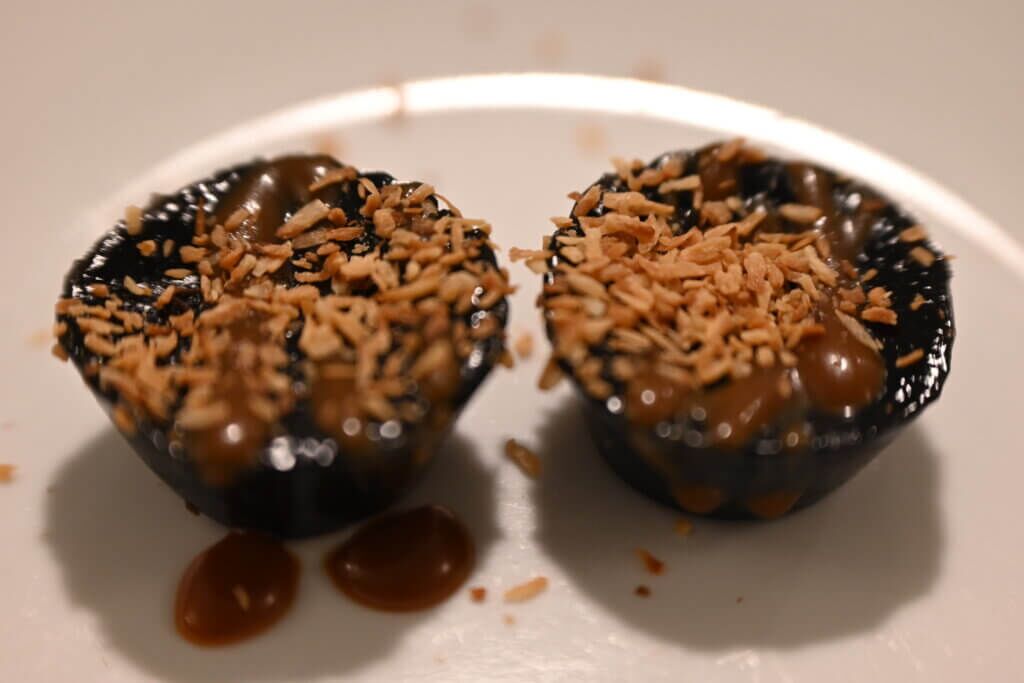
If you ask Caramat what really sets hers apart, she’ll point to the toppings: “What makes it different—the taste—is actually the caramel and that toasted coconut. It really goes well.”
Customers arrive curious—“‘ooh, what does it taste like?’”—and leave convinced: “Once they try it, they’re like, ‘okay, it’s actually really good.’”
Behind the trays is a full life: a branch manager (“my third branch already”) who still finds space in her week for kids, community, and a weekend kitchen rhythm that feels like home.
Born in Pangasinan, in Canada since her teens, she carries that familiar Filipino instinct to feed, to share, to turn a craving into a connection point.
What’s next for Caramat?
She’s focused on consistency: just keeping at it with the caramel’s consistency and the taste, with dreams of pandan and ube down the line, perfected the same careful way.