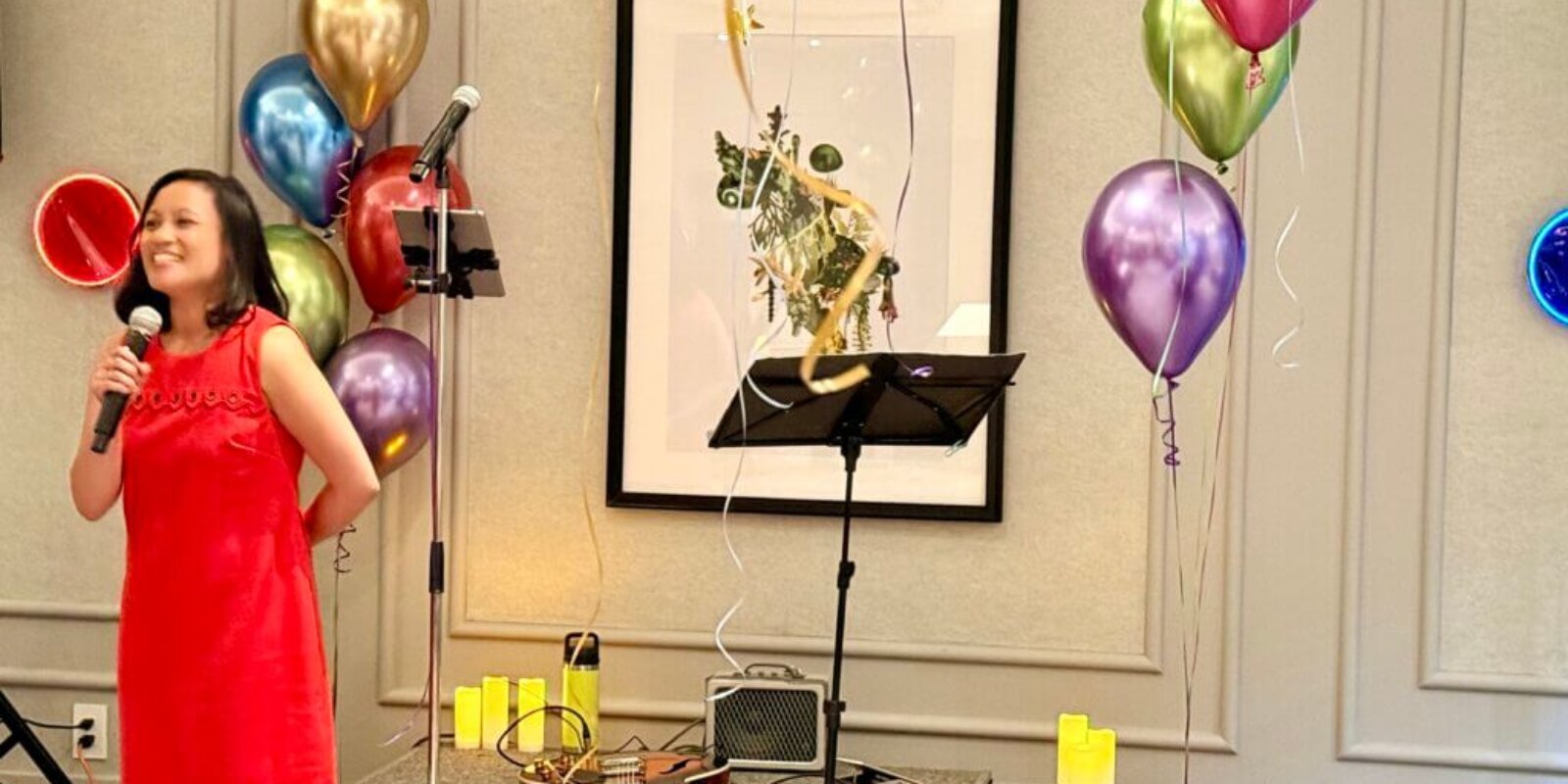
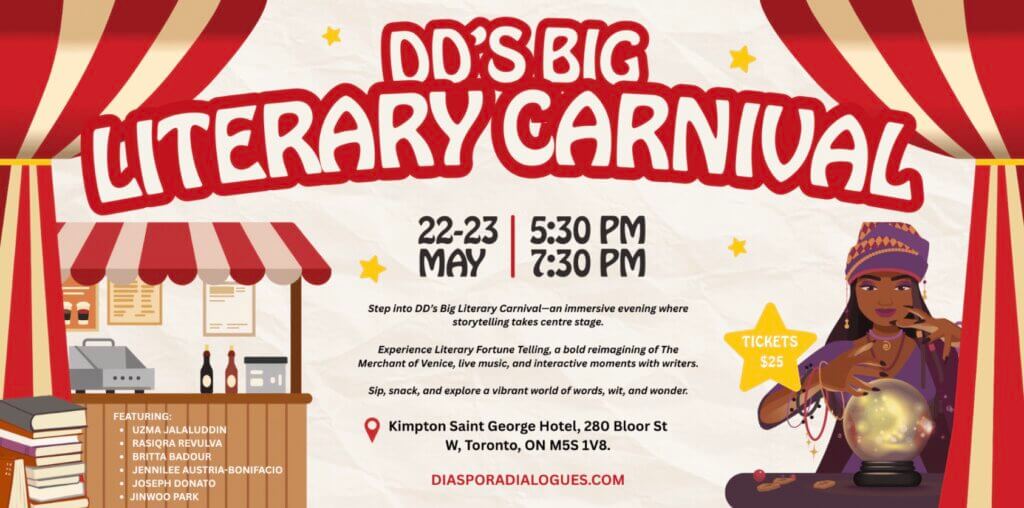
Diaspora Dialogues’ flagship event “Step Right Up: DD’s Big Literary Carnival” on May 22-23, 2026 invited guests into an immersive world where literature met performance, imagination, and community.
Hosted at the Kimpton Saint George Hotel at 280 Bloor St. West in a conference room transformed into a literary playground, storytelling stepped off the page and into real life.
There were literary fortune tellers, live performances, music, and conversations that reminded attendees that stories are not only meant to be read but are meant to be lived.
For aspiring Filipino writers, one conversation in particular stood out.
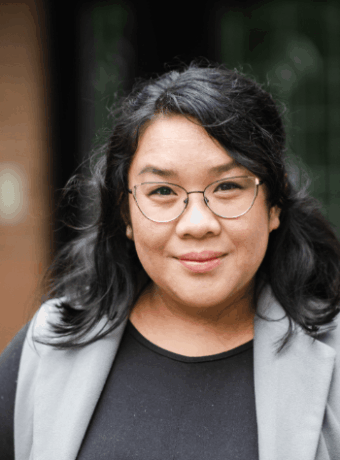
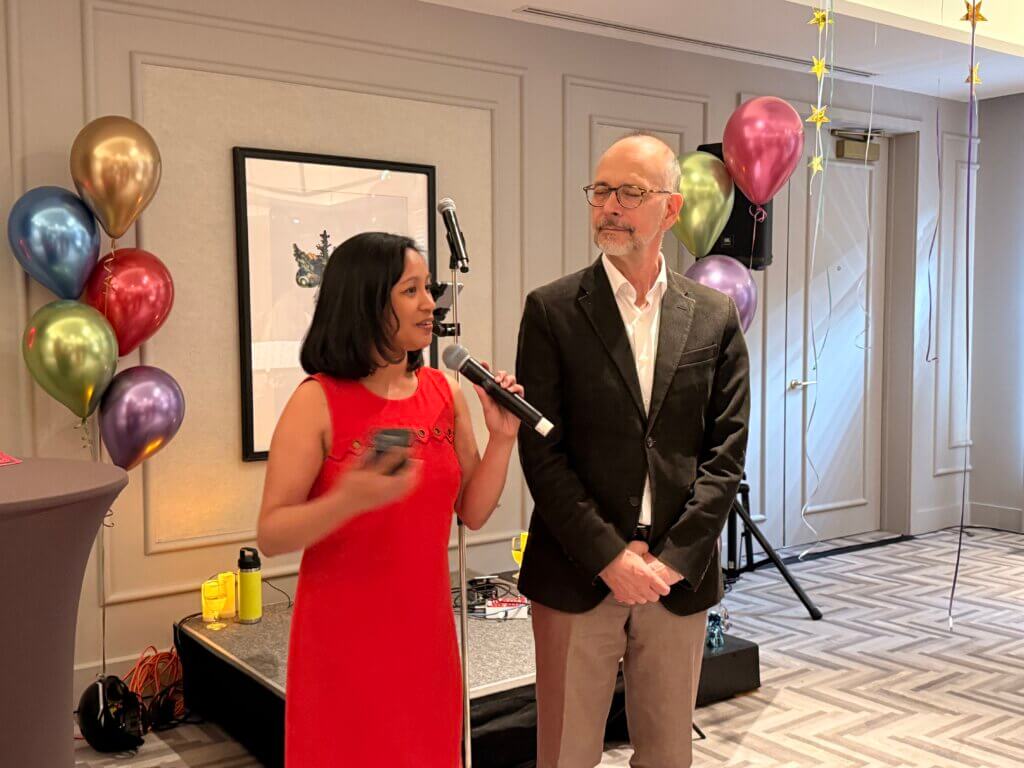
At the event, Filipino-Canadian author Jennilee Austria-Bonifacio spoke passionately about why organizations like Diaspora Dialogues matter, especially for racialized and emerging writers trying to find their place in Canada’s literary world.
“There are actually some really amazing Filipino authors who have received mentorship from Diaspora Dialogues,” Austria-Bonifacio shared.
While she herself did not go through the formal mentorship stream, she credits the organization with helping support her own writing journey through workshops and professional development.
“I’ve taken part in a lot of their lunch-and-learns,” she said. “Before webinars were a thing, I was doing all the ones here.”
For many emerging writers, particularly those from immigrant communities, entering the publishing world can feel intimidating, expensive, and isolating.
That is why Diaspora Dialogues fills such an important gap.
Founded to support emerging Canadian writers from historically underrepresented communities, Diaspora Dialogues helps turn writing into a career through mentorship, professional development, and publishing opportunities.
“We invest in the development of both artist and audience, and on working toward redefining the ‘mainstream’, ensuring it is as diverse as Canada itself,” according to their website.
Its mandate is simple but powerful: to ensure Canadian literature reflects the diversity of Canada itself.
Through one-on-one mentorships, professional workshops, networking opportunities, and publication platforms, the organization helps emerging voices build confidence and sharpen their craft.
One of its strongest offerings is its free mentorship program, which pairs emerging Black, Indigenous, and People of Colour (BIPOC) writers with established authors for months of personalized feedback and guidance.
Writers working on novels, memoirs, poetry collections, and short stories receive support on structure, storytelling, pacing, and voice, often culminating in advice on publication and manuscript readiness.
Austria-Bonifacio has seen firsthand how transformative the mentorship can be for Filipino writers.
“I’ve seen how they’re able to find BIPOC emerging authors and pair them up with established authors,” she said.
“I think that’s really nice, and it’s free.”
For writers juggling day jobs, family responsibilities, or uncertainty about where to even begin, Diaspora Dialogues offers low-barrier opportunities to grow.
Their popular Lunch N’ Learn sessions—often held virtually during lunch hours—provide webinars and professional development workshops on craft, publishing, and career-building.
Alumni and current participants can connect with other writers, ask questions, and build community in an environment designed to nurture rather than intimidate.
For Filipino writers in particular, Austria-Bonifacio says representation and community are everything.
“I think that having something that’s BIPOC-focused is really important,” she said.
“There’s a lot of people who started out here. I’m one of them for sure, so it’s really nice to see all of us kind of grow together.”
Her advice to aspiring Filipino writers?
Start small. Follow the organization online. Subscribe to the newsletter. Attend a Lunch N’ Learn. Meet other writers.
“All you have to do is follow their social media, get on the newsletter,” she said.
“Then you’ll see all the different opportunities coming up.”
For Filipino storytellers wondering if their voice belongs in Canadian literature, Diaspora Dialogues may be exactly the place to begin.