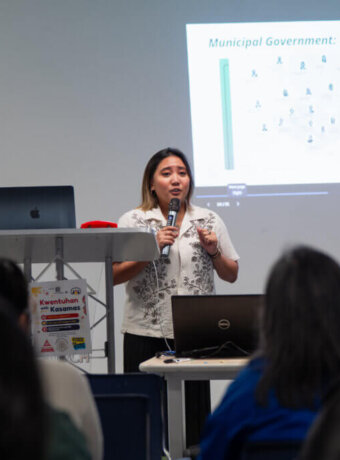
Heritage Toronto is working with Filipino community leaders to preserve and share the history of Little Manila, bringing greater attention to one of the city’s most vibrant cultural communities.
The independent charity, which delivers public programs as an agency of the City of Toronto, offers walking tours, educational resources and historical plaques designed to make the city’s heritage more accessible and engaging.
This year alone, the organization is offering more than 60 walking tours across Toronto, including a new focus on Filipino heritage through Little Manila.
“We deliver public programs to make our city’s heritage accessible, relevant, and engaging to all Torontonians,” said Melissa Cortez, Heritage Toronto’s public programs coordinator.
Besides its well-known plaque program, Cortez said Heritage Toronto develops tours covering neighbourhood history, architecture, arts, sports and cultural communities.
The organization also attends festivals and community events, where it encourages residents to learn more about the city’s past through self-guided tours and educational materials.
Bringing overlooked stories to light

Choosing which stories to tell begins with identifying neighbourhoods and communities that have received less attention.
Heritage Toronto also works with emerging historians, students and community members to develop new walking tours that reflect Toronto’s evolving history.
For Cortez, documenting the histories of communities such as Little Manila is important in a city that continues to grow and change.
“Our city is constantly growing and evolving over time,” she said. “It’s important to preserve our neighbourhood history because it’s so easy for it to get lost if we’re not doing that work.”
She said recognizing neighbourhoods such as Little Manila honours the Filipino workers, businesses and community leaders whose contributions helped shape Toronto while ensuring their stories are not forgotten.
Expanding Filipino representation
Heritage Toronto’s involvement with Little Manila also reflects a desire to address a gap in the organization’s programming.
Although Heritage Toronto previously published digital content on Filipino migration focused on St. James Town, Cortez said there was relatively little material dedicated to Little Manila.
“I noticed that there isn’t that much content that preserves Little Manila, preserves Filipino heritage that is recognized by the city,” Cortez said.
“We were lacking Filipino content, and they were really happy and excited to do the tours this year.”
Cortez said one theme stood out: the Filipino community’s commitment to preserving its own history while welcoming others to learn about it.
She said both Filipino and non-Filipino residents have shown strong interest in exploring Little Manila, demonstrating that the neighbourhood’s story resonates beyond the community itself.
“I think the most interesting thing is that we love to share our history with everybody,” she said.
“There are so many other people who are non-Filipino who are also interested in learning about Filipino heritage, and our kababayans are so willing to share more about our culture, our food, our music and our dance.”
Looking to the future
Cortez described Little Manila as more than a collection of restaurants and businesses.
She said it tells the story of Filipino migration to Toronto and serves as a gathering place for newcomers and second-generation Filipino Canadians alike.
At the same time, she believes the neighbourhood deserves greater recognition.
Many Torontonians, she said, are still unfamiliar with Little Manila because it sits outside the downtown core and has yet to receive official recognition as a cultural neighbourhood.
Major Filipino events such as Taste of Manila are held annually in the Bathurst and Wilson intersection.
Looking ahead, Cortez said preserving heritage requires continually updating stories to reflect the present and ensuring communities remain part of Toronto’s future.
“Our heritage includes our present and future. It’s not just the past,” she said. “We need to continue documenting what’s being done today and preserving those stories so they can inform the future.”