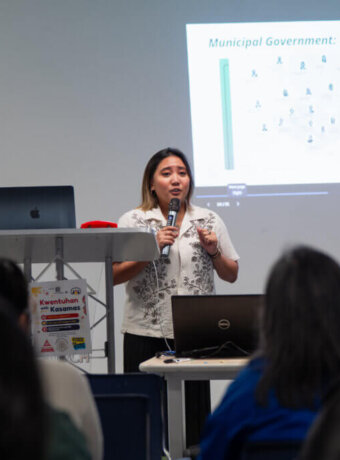
The Heritage Toronto Meals and Migration walking tour took participants through Little Manila on Aug. 8, tracing how Filipino migration, caregiving and entrepreneurship helped shape the North York neighbourhood into a cultural hub for the community.
The tour included restaurants, bakeries, grocery stores and other community spaces while organizers shared stories about Filipino migration, caregiving, entrepreneurship and belonging.
The 1.2-kilometre tour, developed and led by volunteers Jennilee Austria-Bonifacio, Ysh Cabana and Diana Roldan, began at Mabuhay Garden at Bathurst-Wilson Parkette and ended at Kabalen Restaurant.

A place to belong
For Cabana, a first-generation Filipino Canadian who has lived in the area, Little Manila offered something familiar after moving to Toronto.
“Finding this place gives me a sense of, or even a taste, pun intended, of belonging in a multicultural city like Toronto,” Cabana said.
Along the route, the guides traced Filipino migration to Canada from the arrival of Benson Flores, who is believed to have settled in Manitoba in 1930.
Health-care workers from the Philippines arrived in the 1960s and later migration through Canada’s caregiver programs.

Those migration patterns eventually shaped Little Manila, where Filipino caregivers and families settled and businesses followed.
Roldan said the caregiver experience is one of the stories that consistently stands out during the tour because many workers spent years separated from their families before establishing themselves in Canada.
“They sacrifice more than 10 years of their life separated from family,” Roldan said.
“They come here two years and then some of them even emerge as business owners.”
The tour showed how those migration stories remain visible in everyday spaces.


Filipino entrepreneurship evident in Little Manila
In front of an Asian grocery store, participants learned about remittances and balikbayan boxes, packages filled with food, clothing, toiletries and other goods that Filipinos abroad send to relatives in the Philippines.
Other stops highlighted Filipino entrepreneurship, including Wilson’s Haus of Lechon, Daily Bread Bakery and Kabalen Restaurant.
Austria-Bonifacio said the neighbourhood has continued to change throughout the decade she has helped lead the tour.
“We’ve been doing this tour for 10 years, so over the years I’ve seen the different businesses opening and closing and how much more Filipino it gets every single time,” she said.
For participant Chelsea Carpio, who runs Folklorico Filipino Canada, the tour provided historical context to a neighbourhood she has visited many times.
“It was surprising to me to hear that many of these businesses are quite new because, in my mind, these have always been here,” Carpio said.
She said she hopes walking tours encourage people to see Little Manila as more than a destination for Filipino food.
“I’m hoping that with these tours, it brings in a little bit of an influx of interest and people come here more, not just for food, but really for more community building,” she said.

More visibility, representation needed
That community-building was also visible beyond restaurants and stores.
The tour discussed the role of spaces where Filipino youth and LGBTQ+ community members have gathered and found belonging.
Carpio said having physical spaces remains important for organizations such as hers, particularly for young Filipino Canadians looking to explore their identity through music and dance.
“We need a place for young people to be able to express themselves and explore their identities,” she said. “You just need that space.”
For Cabana, making Little Manila more visible could eventually include cultural signage, street designs and other initiatives that identify the area as a distinct Filipino cultural district.
He said the tour itself also continues to evolve through conversations with participants.
“It’s not just us sharing what we know or observe with the research that we did or interviews in the past, but also listening to people even after the walk,” Cabana said.
Carpio said initiatives documenting Filipino history are particularly important because the community has long contributed to Toronto while often remaining underrepresented.
“We have been part of the fabric and history of the city for a long time,” she said. “It’s nice to see that we’re getting a little bit more recognition.”
For those who walked through Little Manila, that history could be found in the businesses, food and community spaces that generations of Filipino Torontonians have built along Bathurst and Wilson.
 Luis Miguel De Castro is a Changing Narratives Fund-Local Journalism Initiative reporter at Mabuhay Canada and a journalism graduate at Humber Polytechnic in Toronto. Originally from the Philippines, he is passionate about community storytelling, multimedia journalism, and amplifying Filipino voices through meaningful local coverage.