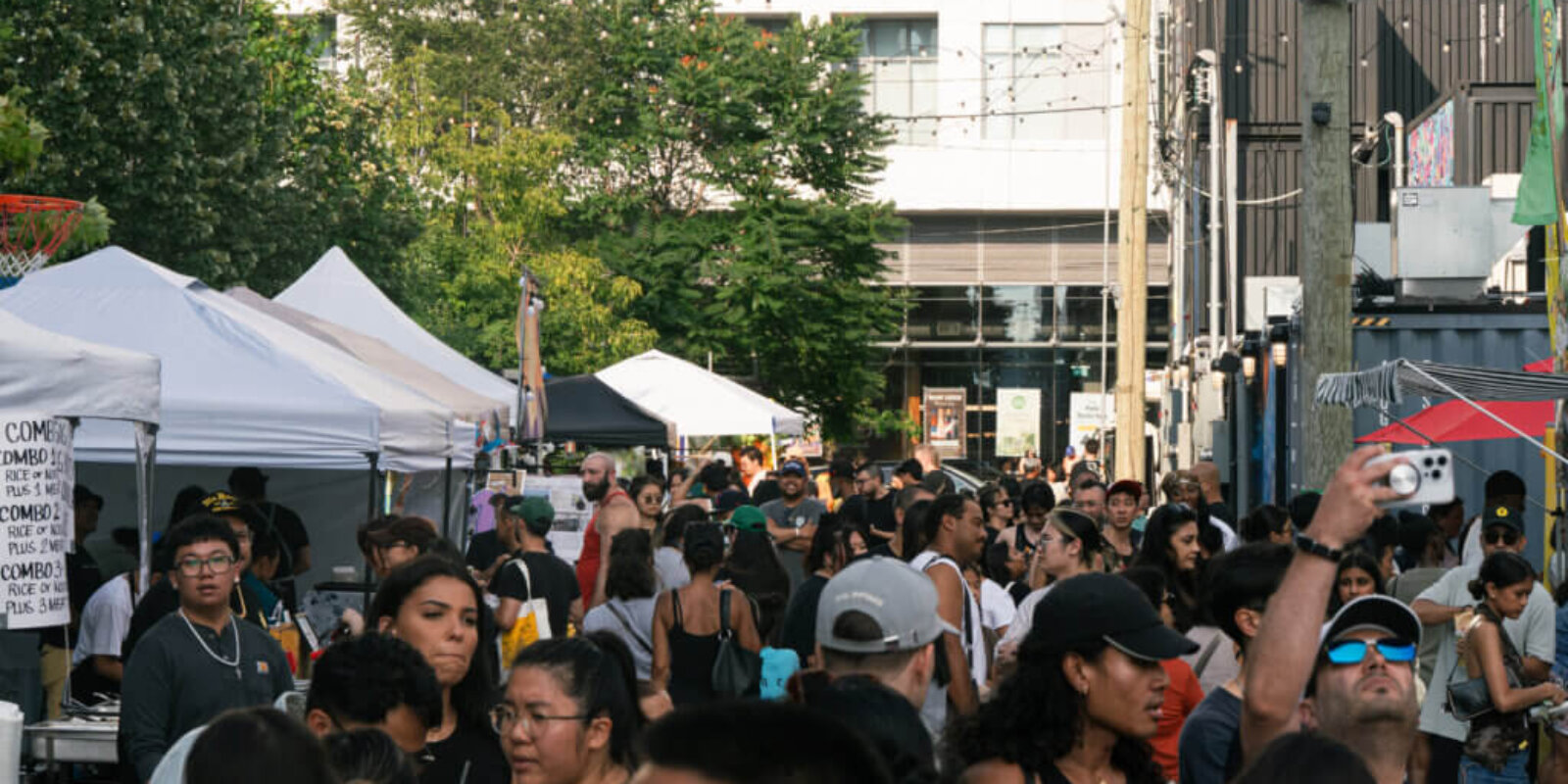
Kalamansi took centre stage at STACKT Market in Toronto on Aug. 8 and 9, as Filipino businesses, artists and community members gathered for the second annual Kalamansi Fest.
The two-day festival, organized by Kalamansi Collective and Barkada Mrkt, was created to celebrate a fruit organizers say has yet to receive the same attention as other Filipino flavours.
“There’s a lot of Filipino festivals across the city and North America. There’s even specific ones for ube, but there isn’t one for kalamansi,” said Kris Pangilinan, founder of Kalamansi Collective.
Pangilinan said the idea was a natural fit for Kalamansi Collective, a clothing and lifestyle brand that pays homage to immigrant families and celebrates the “fruits of their labour.”
For him, the festival is an opportunity to introduce more people to kalamansi while giving Filipino businesses the freedom to show how the citrus can be used in different ways.
“We want the world to know that there’s more than lemon, lime and yuzu and oranges,” Pangilinan said.
“There’s something called the Philippine lime, which is something of our own.”

Putting kalamansi in the spotlight
The festival first launched at STACKT Market in August 2025 as a one-day event. Pangilinan said this year’s edition nearly doubled in size and expanded across the weekend.
He said its growth shows there is interest in Filipino festivals that put a spotlight on more specific parts of the culture.
“There’s a hunger for more Filipino events like this that specialize in one dish or one fruit or one vegetable,” Pangilinan said.
“We’re not your average Filipino festival. We are doing it differently.”
Supporting Filipino businesses and creatives
While kalamansi served as the centrepiece, the festival also gave Filipino-owned businesses and creatives a space to introduce their work to the community.
Hamilton-based photographer Nicole Lazaro, owner of Nicole Lazaro Photography, brought a Polaroid photo booth to the festival.
Lazaro specializes in film photography for weddings and events and said the booth allows her to bring her medium directly to the community.
“Because I’m Filipino, it’s a way for me to showcase my products and my photography,” Lazaro said.
“It’s a really great way to connect with the Filipino community too.”
Lazaro said markets such as Kalamansi Fest can also help independent businesses reach new customers while encouraging people to shop locally.
“It’s a great way to showcase local small businesses,” she said.
“We want to encourage everyone to shop local, and this is just one of those events that we have locally to get everyone together.”


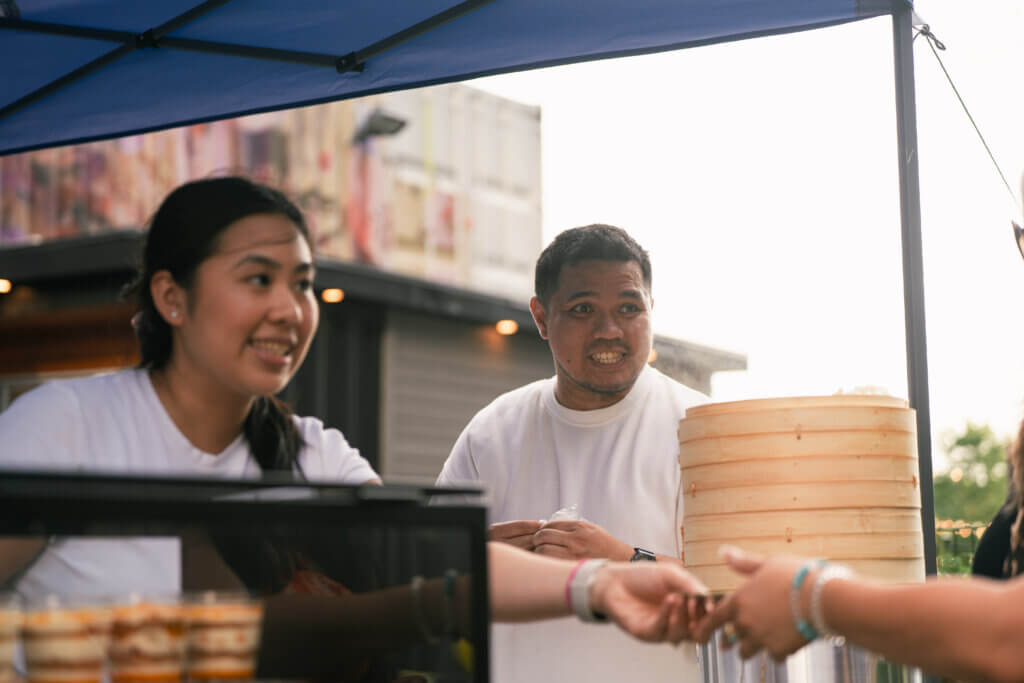

Himagas co-owner Kevin Salisi also returned for his second Kalamansi Fest.
His Toronto dessert business focuses on traditional Filipino kakanin and other desserts inspired by the food he grew up eating in the Philippines.
Salisi said those flavours can bring customers back to memories of food made by their families.
“When people taste our products, they go back,” he said, describing customers remembering dishes prepared by their mothers or grandmothers.
Food, however, was only one part of the festival.
Pangilinan said organizers wanted to create room for Filipino creatives who may not normally have a platform at food-centred cultural events.
Programming included on-site poetry, piñata-making workshops and Filipino DJs, along with singers and rappers.
“We want to make sure that we’re creating a space for everyone,” Pangilinan said.
“That’s what we’ve always strived for Kalamansi to be—a platform for Filipino creatives and artists to showcase their work.”
Creating a connection to home

For attendee Sheena Cheng, who grew up in the Philippines and moved to Canada two years ago, the combination of food, music and community offered a connection to home.
“Sometimes I feel disconnected,” Cheng said. “So when I am here and I see my fellow kapwa Filipino and seeing the food and stuff and hearing some of the music, it just reminds me of home.”
Cheng said she was also struck by seeing people from other cultural backgrounds attending the festival and experiencing Filipino culture.
That wider audience is exactly who Pangilinan hopes the festival can continue reaching as it grows.
“We want to bring in a new generation of Filipinos and a new generation of people who don’t really know what Filipinos are or what we bring to the table,” he said.
 Luis Miguel De Castro is a Changing Narratives Fund-Local Journalism Initiative reporter at Mabuhay Canada and a journalism graduate at Humber Polytechnic in Toronto. Originally from the Philippines, he is passionate about community storytelling, multimedia journalism, and amplifying Filipino voices through meaningful local coverage.