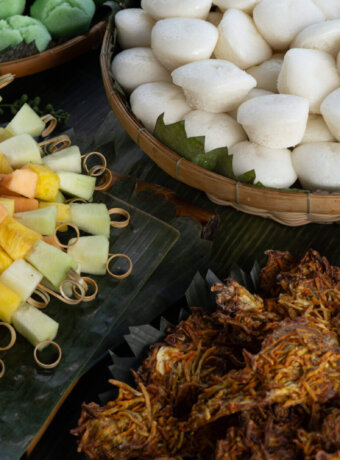
PhD candidate Giana Tomas and her professor Dr. Kim Lopez visited Makilala Restaurant in Toronto and was ‘transported’ back to the Philippines.
Last November 2025, I visited Makilala at 105 Church St. in Toronto with my PhD supervisor, Dr. Kimberly “Kim” Lopez.
Because there are already many reviews about Makilala’s culinary offerings, I will share what visiting this restaurant brought to us: memories of ‘home’.
The topic of ‘home’ has been of interest to me for quite some time now.
When we entered the restaurant, we were greeted by friendly staff who directed us to an empty table.
I immediately noticed the ambiance: a ‘dirty ice cream’ cart, sports jerseys hanging on a clothesline, a sari-sari store complete with snacks hung on a screen window.
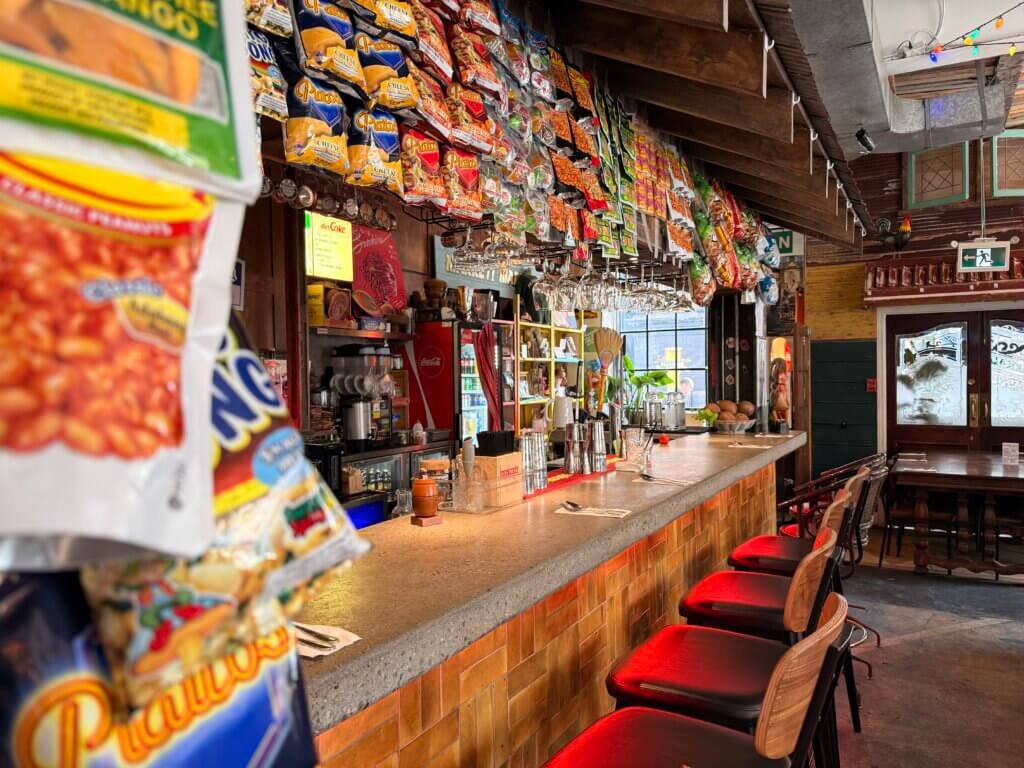
A beautiful parol (Christmas lantern) hung from the ceiling, with wooden church pews serving as seating.
I felt like I was transported back to the Philippines.
Once our orders were taken, Kim and I continued to observe our surroundings.
Kim pointed out how the wooden furniture and the sari-sari store reminded her of her family’s ancestral home in Dinginan, Roxas City.
She pointed out the group of titas (aunties) sitting behind us at the restaurant—they were laughing out loud, speaking Tagalog, and drinking San Miguel beer.
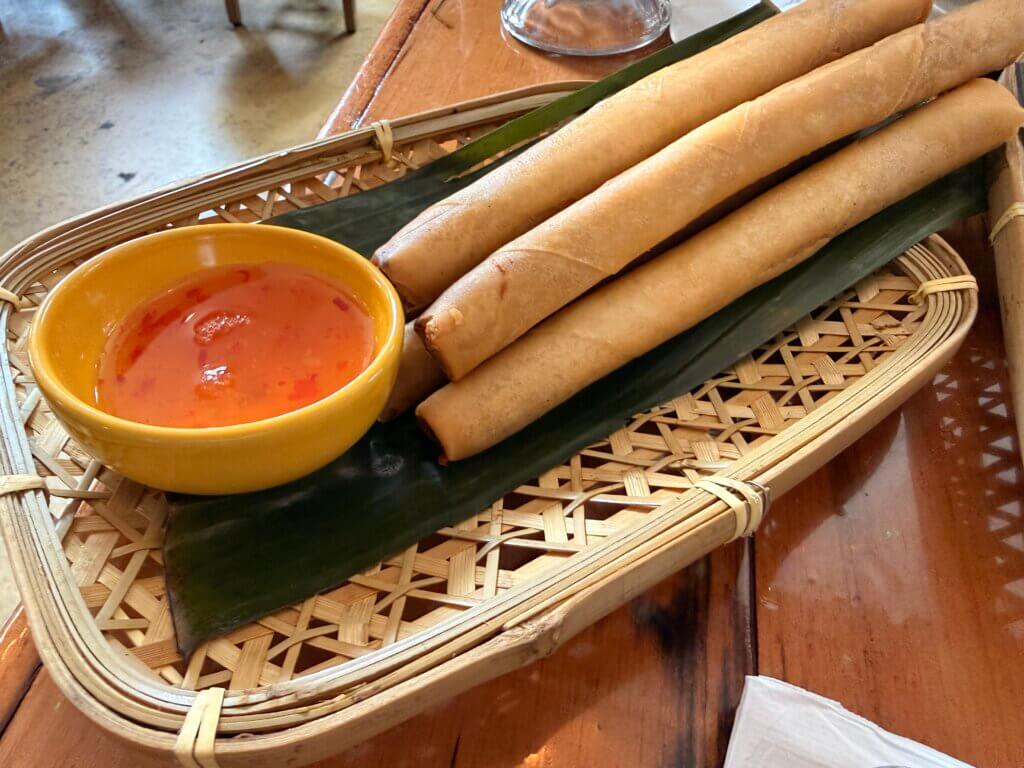


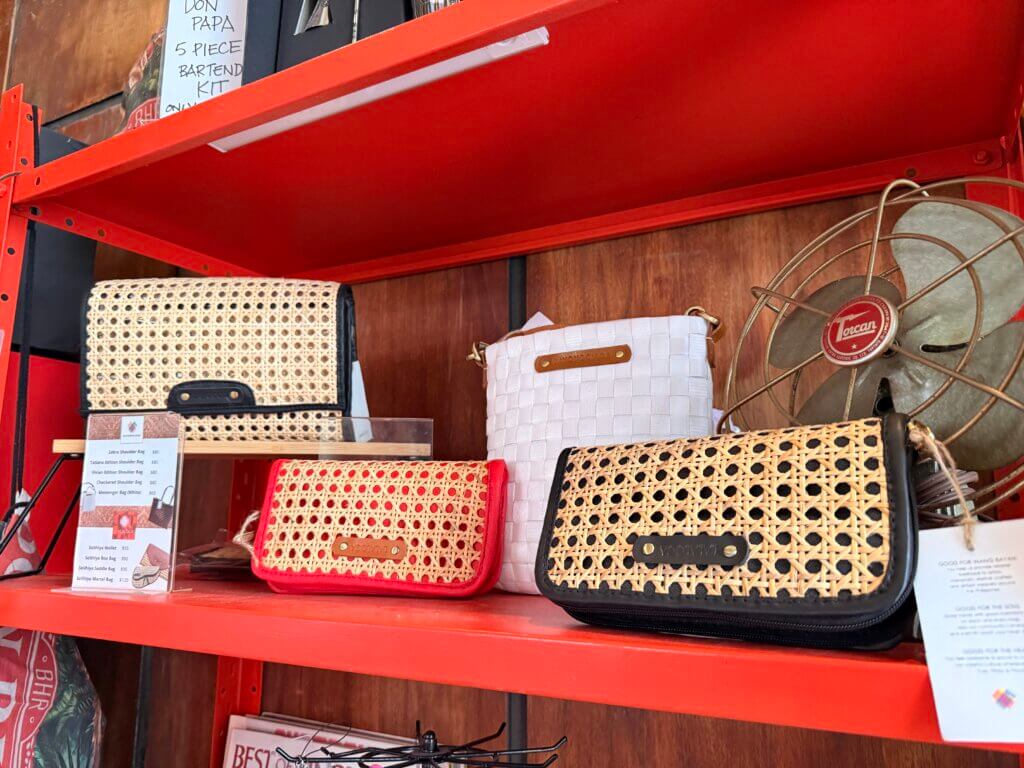
Left to right: Lumpia shanghai, pandan and ube drinks, and Filipino accessories sold at Makilala Restaurant. All photos by Yona M. Harvey
I was fascinated by the karaoke set-up and the stage located at the back of the restaurant.
“Of course there’s a karaoke machine. It’s not a Filipino restaurant without one,” I said to Kim.
This set-up sparked memories of countless parties and family reunions I attended when I was a kid living in the Philippines.
Kim and I enjoyed the lumpia, kaldereta, ginataang langka, rice, and calamansi soda that we ordered.
In between our work conversations, we talked about our own connections to home: the Philippines.
This conversation enabled us to return to, or visit, ‘home’ through the artifacts we were observing.
We left the restaurant with bellies full, take-out boxes filled with leftovers, and memories of ‘home’.
During one of our recent meetings, Kim and I recounted our visit to Makilala and how we traced, or metaphorically returned ‘home’ through what we call ‘artifacts of nostalgia’.
We even wrote a poem (see below) about our visit to Makilala and reflected on sensorial—breath, air, smoke, smog—memories and Philippine diasporic experiences.


I shared with Kim how the wooden window panels at the restaurant reminded me of traditional Filipino homes.
This brought me a sense of connection to the land and away from the cosmopolitan Manila.
I shared with Kim that because I resettled in Nova Scotia, I’ve only felt more connected to ‘home’ when I moved to Ontario because this place offered me connections to urbanism and liveliness of the city that I was once so familiar with.
On the contrary, Kim shared that for her, the sari-sari store and kitchen set-up at the restaurant was what reminded her more of ‘home’.
Despite being from Toronto, she was reminded of Dinginan, Roxas City, a place to slow down.
She associated ‘home’ with a provincial identity.
From the dirty kitchen with a water pump to wash dirty dishes, to witnessing more reverence for Indigeneity in the provinces than in the big city.
Our visit to Makilala and the discussions Kim and I continue to have about our visit left a meaningful impression.

Our visit revealed many contrasts and similarities between how we connect to ‘home’ and our embodiments of ‘home’ through memory and artifacts.
This collective reflection deepened my appreciation not only for our culture, but also for the different ways in which members of the Filipino diaspora relate to ‘home’.
 Giana Tomas is a learner, writer, community partner, and scholar who advocates for wellness of migrant and diasporic communities. Born and raised in Manila, Philippines, she is dedicated to learning and sharing stories about how individuals and families from the Philippines draw connections to ‘home’ when they migrate. To connect with Giana, visit @giana_tomas on Instagram.

Kimberly J. Lopez works as an Associate Professor in Recreation and Leisure Studies, in the Faculty of Health at the University of Waterloo.