


For 12-year-old Basti Mangaser, growing up in Canada has never meant feeling disconnected from his Filipino heritage.
Much of that connection comes through the meals shared around his family’s table, where Filipino dishes have become lessons in culture, identity and family history.
With more than one million people of Filipino descent now living in Canada, many families continue to rely on food as one of the most concrete ways to pass traditions from one generation to the next.
Family recipes, holiday gatherings, and shared meals often become a child’s first introduction to the Philippines, even if they have never lived there.
Mangaser said Filipino food has helped him better understand where his family comes from.
“I do think Filipino food helps me learn more about my family’s roots because it’s one of the more unique types of Asian food,” he said.
“When I eat it, I have a sense of uniqueness. This is what it means to eat like a Filipino.”
Shared Meals at Home
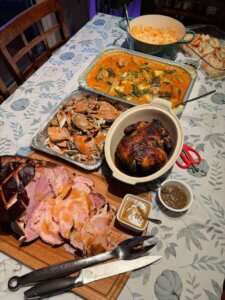
For Mangaser, Filipino food is closely tied to family gatherings. He said meals shared at home make him feel connected to relatives and to the Philippines despite growing up in Canada.
“It definitely makes me feel Filipino to eat dishes like adobo or sinigang because it’s just a different experience compared to eating sushi or Western food,” he said.
Sinigang, in particular, has become his favourite.
“Sinigang is my absolute favourite Filipino dish,” he said. “It reminds me of my family because it’s a family dish that I grew up with.”
Mangaser said cooking traditions have also sparked his curiosity about his family’s recipes.
“My lola has this special sauce that comes with tinola, and it’s amazing,” he said. “I’ve learned different ways to cook already unique Filipino foods.”
He hopes those recipes will stay in the family.
“I’d like to learn different recipes because my lola cooks a lot of different Filipino foods, and I don’t want the way she cooks to get lost,” he said.
Mangaser said he plans to continue eating and eventually cooking Filipino food as an adult.
“I hope to learn how to cook these foods so I can eat them in the future,” he said. “They’re just so good.”
He also wants to pass those traditions to the next generation.
“I want my future children to try everything, from my great-grandma’s tinola recipe to my mom’s sinigang recipe,” he said. “They’re so important to our culture and our tradition.”
Easiest way to experience the culture
Filipino Chef Julian Cuenca says experiences like Mangaser’s are common among Filipino Canadian families, where recipes become more than meals and serve as a connection between generations.
“I grew up in the Philippines, so Filipino food was just part of everyday life,” Cuenca said.
“But after moving here, I realized food is one of the easiest ways for kids growing up in Canada to experience the culture, even if they’ve never been back home,” he said.
Cuenca says that when families cook traditional dishes together, children are not only learning recipes but also hearing stories about relatives, hometowns, and celebrations in the Philippines.
“Every family has their own way of cooking. When I make the dishes my parents taught me, it reminds me of home. Those recipes carry memories, and that’s what makes them special,” he said.
He says introducing younger generations to Filipino food helps ensure traditions continue even as families build their lives in Canada.
“I’d tell them to learn at least one recipe from their parents or grandparents. For me, it’s about keeping a small part of your family with you and passing it on one day,” he said.
As new generations grow up in Canada, many families continue to rely on traditions such as cooking and sharing meals to maintain connections to their cultural identity.
For Mangaser, those traditions have already left a lasting impression.
“Filipino food teaches people what it means to be Filipino,” he said. “It’s such a unique experience to eat all these different foods. They teach people what it means to be Pinoy.”
 Luis Miguel De Castro is a Changing Narratives Fund-Local Journalism Initiative reporter at Mabuhay Canada and a journalism graduate at Humber Polytechnic in Toronto. Originally from the Philippines, he is passionate about community storytelling, multimedia journalism, and amplifying Filipino voices through meaningful local coverage.


