


Filipino Canadians are becoming more comfortable talking about their mental health, but stigma, cultural expectations and limited access to culturally informed care prevent many from seeking support.
Psychotherapist Elda Almario says attitudes toward mental health have shifted over the past decade, with more people recognizing the benefits of therapy and openly discussing anxiety, burnout and emotional well-being.
However, she believes the Filipino community still has a long way to go before mental health is treated like any other aspect of health.
“Malayo na pero malayo pa. (There has been significant movement, but it’s not yet enough),” Almario said.
“There are still people being left behind, there’s still stigma (and) people who refuse to talk about it. To some extent, it’s still taboo.”
Almario, founder of Laro Therapy, has worked in mental health for more than a decade in both the Philippines and Canada.
Since immigrating to Canada eight years ago, she has increasingly worked with Filipino Canadians looking for a therapist who understands both their language and cultural background.
She said many clients seek someone who already understands the realities of immigration, family expectations, and Filipino culture without needing those experiences explained first.
Although more people are reaching out for professional help, Almario said therapy should not be viewed as the only path to better mental health.
Therapy is but one form of treatment

“My caseload is full, and I’m constantly holding a wait-list,” she said.
Mental wellness can also come from trusted family members, close friends, community organizations, and other forms of support, she added.
“I also don’t want to limit mental health support to therapy,” Almario said.
“Therapy is one form of treatment. What really informs mental wellness is so many things: financial stability, relationships, and many other factors.”
For people unsure where to begin, Almario encourages them to first identify the kind of help they need.
In some cases, talking with someone they trust may be enough to take the first step.
Others may benefit from community programs, counselling or medical care depending on their circumstances.
She said people experiencing a mental health crisis should seek immediate emergency care.
Those looking for ongoing support have several options, including psychiatrists, psychologists, registered psychotherapists, group therapy and community-based programs.
Access, however, remains a challenge.
Lengthy Wait Times
Psychiatrists are covered under OHIP but often have lengthy wait times.
Services provided by psychologists and registered psychotherapists generally require private insurance or out-of-pocket payment, making them inaccessible for some people.
For those without extended health benefits, Almario recommends exploring community mental health agencies that provide low-cost or free services, although many also have waiting lists.
She added that culturally informed care remains limited because there are still relatively few Filipino mental health professionals practising in Canada.
“There is comfort when people see someone who looks like them and understands their lived experience,” she said.
Almario pointed to organizations working to improve access, including Kababayan Multicultural Centre, which is developing additional mental health supports for Filipino Canadians.
She also noted that some community agencies, including Strides Toronto, have Filipino mental health workers serving specific communities.
Almario said Larô Therapy is also expanding its services to meet growing demand.
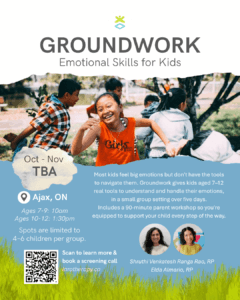
This fall, the practice will launch Uwian Na, a group therapy program for Filipino adults, as well as Groundwork: Emotional Skills for Kids, a five-day small-group psychotherapy program in Ajax designed to help children ages 7 to 12.
While improving access is important, Almario believes reducing stigma remains equally critical.
Filipino Expectations
Among the concerns she encounters most often are strained relationships between parents and their adult children, many of whom struggle with expectations rooted in Filipino culture.
“I do a lot of work with young adults who have deep internal wounding with their parents or their family of origin,” she said.
“There’s so much love from the children to the parents and from the parents to the children, and yet how it shows up is in this very complex, not straightforward way.”
She said many Filipinos still grow up believing that mental illness reflects weakness, making it harder to ask for help.
Cultural values such as hiya (shame) and utang na loob (debt of gratitude) can also become barriers when they discourage people from expressing themselves or setting healthy boundaries.
“Setting boundaries doesn’t mean you’re ungrateful,” Almario said.
“A boundary is a space where you love yourself and the other person at the same time.”
As an immigrant herself, Almario understands the emotional toll of starting over in another country, from rebuilding support systems to navigating unfamiliar services.
She hopes continued conversations will help normalize seeking support before problems become overwhelming.
“The more we talk about it, the more people realize they’re not alone,” she said. “That’s how we reduce stigma.”
 Luis Miguel De Castro is a Changing Narratives Fund-Local Journalism Initiative reporter at Mabuhay Canada and a journalism graduate at Humber Polytechnic in Toronto. Originally from the Philippines, he is passionate about community storytelling, multimedia journalism, and amplifying Filipino voices through meaningful local coverage.


