
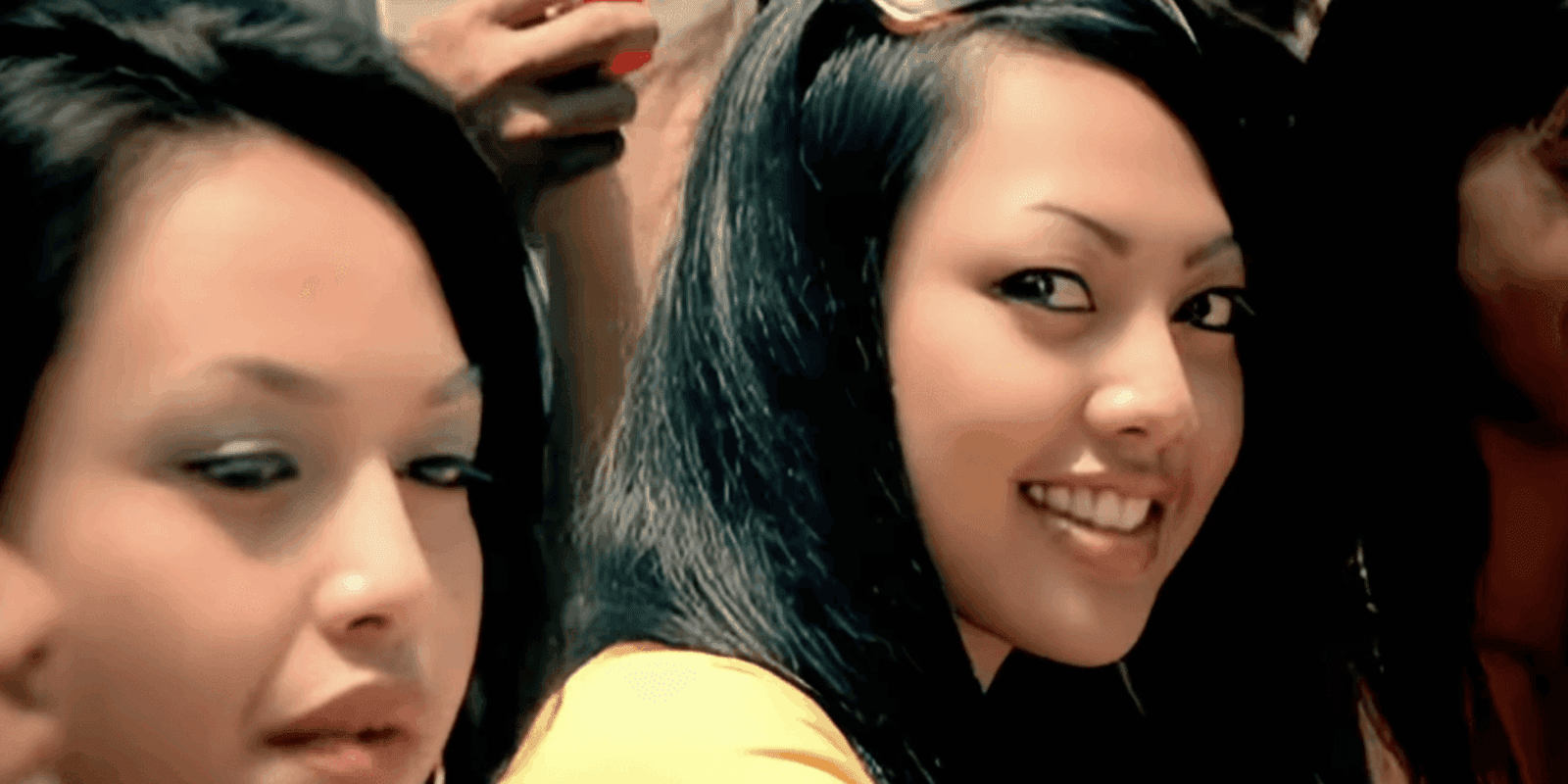
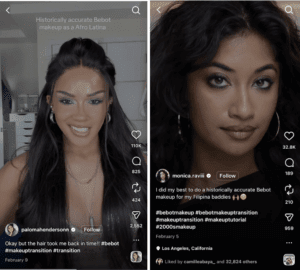
A viral makeup trend called “Bebot” (“beh-boht”) is taking over TikTok and Instagram, and it’s a moment for Filipina/x beauty.
Creators of Filipino and non-Filipino descent are embracing the look: sparkly silver-gray eyeshadow, softly smudged dark liner, defined eyebrows, bronzed temples and cheekbones, and a frosty baby-pink gloss edged with a darker-toned lip liner.
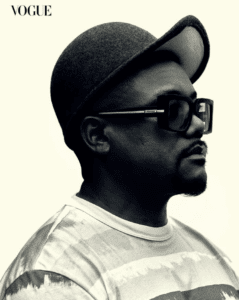
The term “bebot” gained popularity from the early 2000s song, “Bebot” by Black Eyed Peas .
This Tagalog song was sung by Filipino-American Black Eyed Peas member Allan Pineda Lindo, known professionally as Apl.de.Ap.
“Bebot” means beautiful Filipina, or what the Gen-Z’s call, a Filipina “baddie”.
The song’s lyrics describe a confident and beautiful Filipina woman who knows how to hustle to get what she wants while fulfilling her responsibilities.
It describes a “go-getter” who is also beautiful and confident, at the same time.
Parts of the song go like this:
Hoy pare, pakinggan nyo ko Hey dude, listen up
Eto nang tunay na Filipino This is a true Filipina
Galing sa baryo sa Pangbato She hails from barangay, Pangbato
Pumunta ng L.A. nagtrabaho She went to L.A. to work
Para makatulong sa nanay To help her mom
Dahil sa hirap ng buhay Because life is hard
Pero masaya pa rin ang kulay But life is still colourful
The early 2000s, partly the “Y2K era”, was a fashion era of low-rise jeans, glitter belts, large hoop earrings, shiny lip gloss, hair poufs, and mini-shoulder bags.
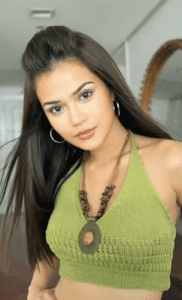
It was also, unfortunately, an era that popularized crash dieting, size 00-2, and whiteness—characterized by fair or porcelain skin, a high-bridged nose, straight hair—as the beauty norm.
This created immense pressure for many individuals: an unrealistic and toxic beauty standard.
In the early 2000s, to be beautiful meant to be tall, white, and skinny.
This global phenomenon neglects other forms of beauty that exist beyond the ‘white’ template of beauty.
Twenty-plus years after the song “Bebot” was released, we are seeing the “bebot makeup” trend rise as a resistance to narrow or limited (e.g., Western) beauty standards.
The representation and celebration of Philippine culture in beauty and makeup aesthetic in these digital spaces, is a win.
We deserve to take a bow.
However, it’s also important to keep in mind that colourist, racist, and discriminatory beauty standards still exist.
As resistance to colourism and racism, the bebot makeup trend asks us to consider: what does the popularity of the bebot makeup trend say about the beauty trends, standards, and norms of our current times?
What was society willing to accept as ‘beautiful’ in the past, versus now?
How will beauty trends, standards, norms continue to shift, if at all?
What does this say about Filipino/a/x beauty?
The bebot makeup trend draws our attention to morena beauty—sun-kissed, tanned—with thick and dark eyebrows, full lips, and glitter eyeshadow as a nod to the Y2K era.
These elements spotlight features that are not necessarily upheld by a Western standard of beauty and yet, are still considered beautiful.
With the rise of the bebot trend, it’s fair to ask: are we finally shifting beauty away from a narrow, Westernized template toward something more inclusive?
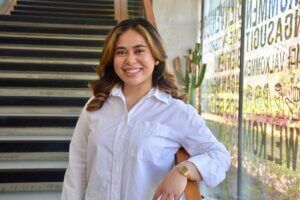 Giana Tomas is a learner, writer, community partner, and scholar who advocates for wellness of migrant and diasporic communities. Born and raised in Manila, Philippines, she is dedicated to learning and sharing stories about how individuals and families from the Philippines draw connections to ‘home’ when they migrate. To connect with Giana, visit @giana_tomas on Instagram.


Millennial’s Guide to Filipino Cooking: 4 Dishes To Cook
April 12, 2026 @ 4:15 pm
[…] Giana Tomas is a learner, writer, community partner, and scholar who advocates for wellness of migrant and diasporic communities. Born and raised in Manila, Philippines, she is dedicated to learning and sharing stories about how individuals and families from the Philippines draw connections to ‘home’ when they migrate. To connect with Giana, visit @giana_tomas on Instagram. […]
Filipino Book Review: 'Big Little Man: In Search of My Asian Self'
May 17, 2026 @ 2:50 pm
[…] Reading ‘Big Little Man: In Search of My Asian Self’, written by the late Alex Tizon, taught me more about myself and my Filipino culture. […]