
A ballerina can possibly twist an ankle while doing a pirouette, a belly dancer may put out her hip while undulating to Middle Eastern music, or a wanna-be Michael Jackson may trip backwards while moon-walking.
Yes, dancing poses a hazard especially to those with two left feet, but Filipino dancers have brought the bar (and bamboo poles) up a notch.
In particular, there are three Filipino dances that require a high degree of hand-eye coordination and jumping and balancing skills: Sayaw sa Bangko, Tinikling and Igorot Banga dance.
These dances require you to be brave and be a risk-tolerant, confident stunt person, as you dance to fast, uptempo music and risk life and limb.
And yes, a dazzling smile is part of the job description.
Think it’s easy? Try them yourself next time you’re at a Filipino event. (You might want to stick to good ol’ cha-cha, or the harmless Gangnam style.)
Here are the Top 3 Riskiest Filipino dances:
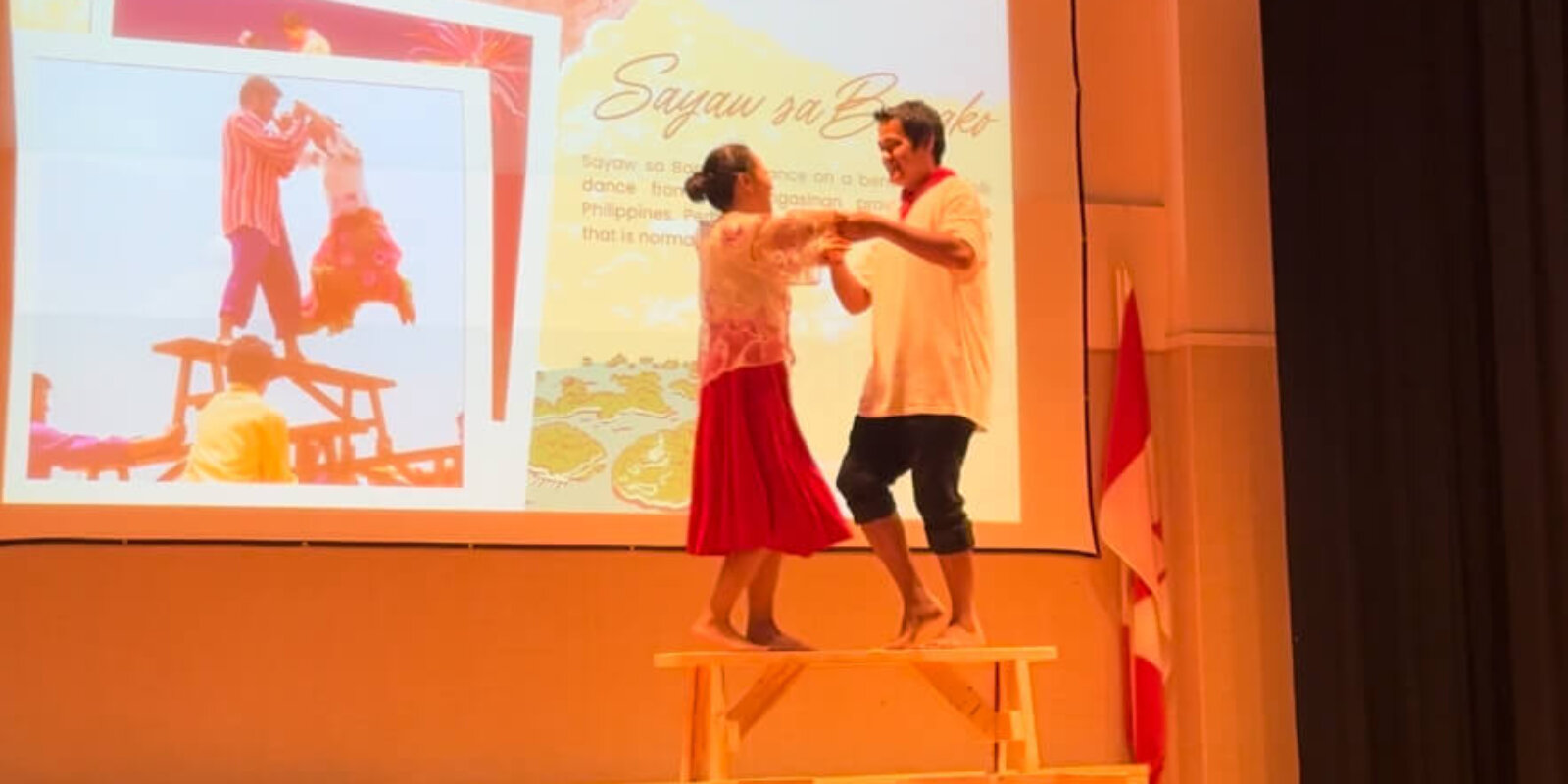
Sayaw sa Bangko
Two dancers stroll on stage with three wooden benches as they start the dance called Sayaw sa Bangko (Dance on a Bench).
This folk dance from Pangasinan province starts innocently enough, as they gracefully twirl, circle the bench, and sashay to the music.
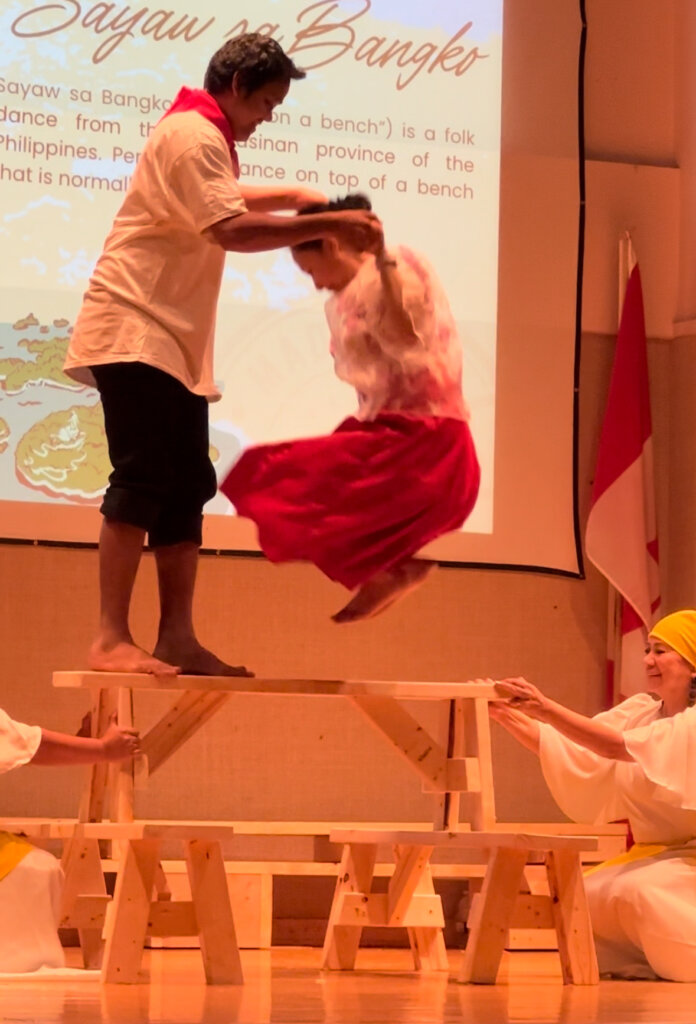
Then one of the dancers hop on top of the bench, followed by her partner.
This time, they dance like Olympic gymnasts on a wooden beam, hopping from one end of the bench to the other, the dancers alternatively jumping from the floor, on to the bench, and back down again.
Just when you think they’re done, two more dancers come on stage, and help them prop the main bench on top of two other benches.
The stakes are higher this time, as the dancers now have to hop three feet off the floor, and on to the bench.
One wrong move, and they could break a leg, an ankle, or a gazillion other body parts.
But that’s okay, we Filipinos like to see you hold your breath and drop your jaw to the floor.
The stakes (and benches) are higher in this performance of Sayaw sa Bangko, with dancers having to jump four benches high. YouTube video
Tinikling
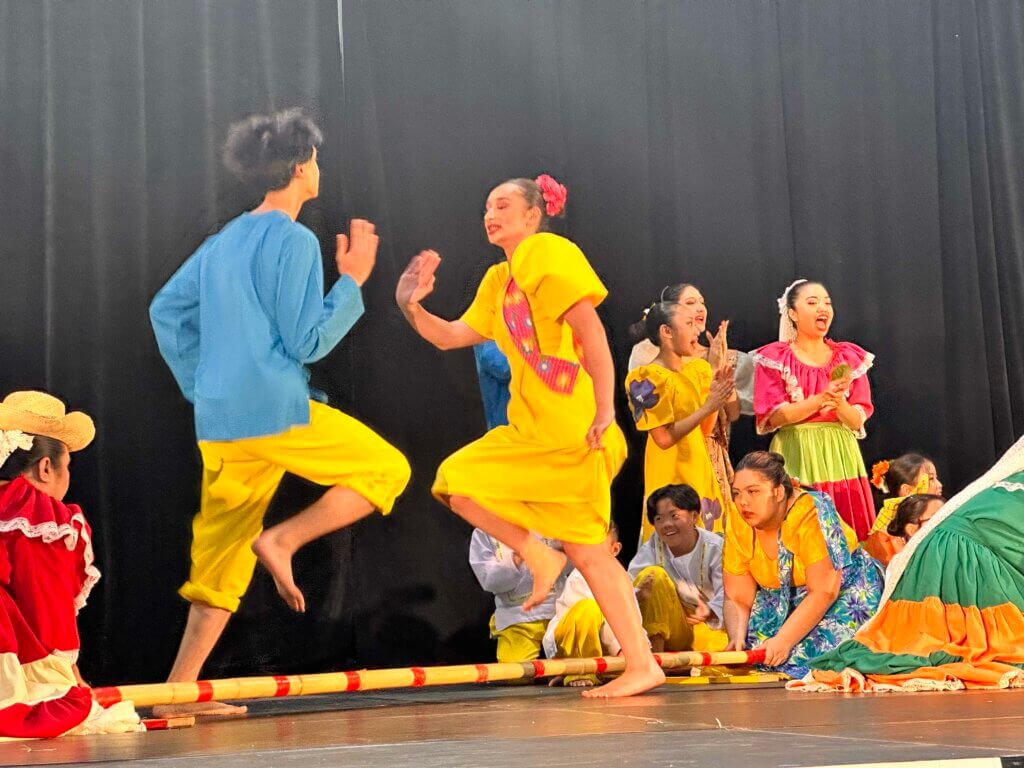
Perhaps the most well-known and most exciting of all Filipino dances, tinikling is a staple at many festivals, fiestas and celebrations in the Philippines and around the world.
Two people “clap” two bamboo poles together, while the dancers jump in and out of the poles, sometimes holding hands, other times turning and hopping.
Speeding up the music, being blindfolded, and having two or three couples flit in and out of the poles create extra challenges and risk.
This dance originated in the Visayas region of the Philippines, and its movements mimic that of a tikling bird (buff-banded rail).
Rondalla music is often played with this dance, although modern versions sometimes feature contemporary music.
Another dance that’s similar to tinikling is the singkil dance from Mindanao, the southernmost part of the Philippines.
Singkil also involves bamboo poles, but where tinikling features happy, smiling and exuberant dancers, singkil features un-smiling, haughty-looking and sombre dancers with slow, regal movements.
A princess figure is the focus of this dance, and she is often followed by another woman holding an elaborate umbrella over her head.
Wearing vivid silk beaded dresses and waving large, shiny fans, the singkil’s soundtrack is pared-down in contrast, with nothing but gongs, drums and kulintangs.
The bamboo poles are almost an accessory, a red carpet to gingerly walk on, and certainly not the main focus of this dance.
All eyes are on the princess. After all, a princess cannot be upstaged.
Igorot Banga dance
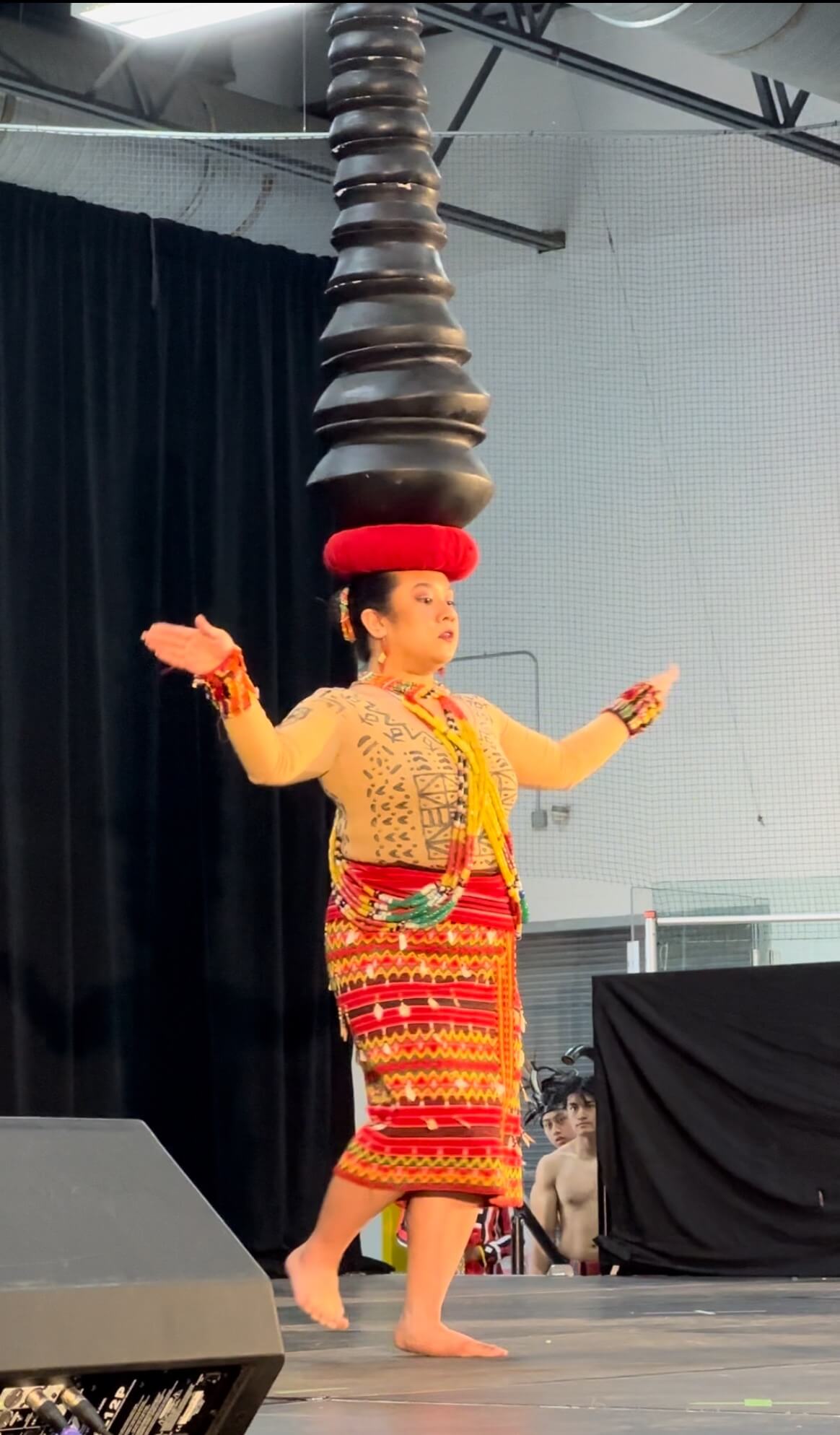
This dance is the ultimate balancing act: 10 or more clay pots are stacked carefully balanced on top of a woman’s head, with the ultimate test of her agility and stability shown once she stands up and starts dancing to the beat of traditional gongs.
Originating from the Kalinga province, this dance symbolizes the act of Kalinga maidens fetching water in a banga (clay pot).
A rolled cloth acts as a balancing support for the clay pots on her head.
The main dancer, the more experienced one of the group, leads the dance with the most number of pots to stabilize.
Every performance of this dance is a Russian roulette—will this be the time that all ten pots come crashing down on the floor?
With bated breath, we hope that we never get to witness it for ourselves.
Without risk, how much fun would a dance be?

These Top 5 Filipino Festivals Will Dazzle Your Senses
March 13, 2025 @ 9:40 pm
[…] a festival happening almost every month, these grand celebrations are a mix of religious devotion, historical […]
Disco + Pinoy Grocery: Inside Seafood City's Dance Parties
December 14, 2025 @ 9:25 pm
[…] true Pinoy fashion there was line dancing, of course—because what Filipino party is complete without at least one tightly synchronized […]
Why the Philippines Pavilion at Carassauga Feels Like Home
May 25, 2026 @ 9:15 pm
[…] showing about 50 dances from the Cordillera, Maria Clara, Lumad, Mindanao, and rural (areas),” she […]